
Rahul Guleria
SEO Executive
Creative,
Branding
& Growth
in the Global
Digital Ecosystem
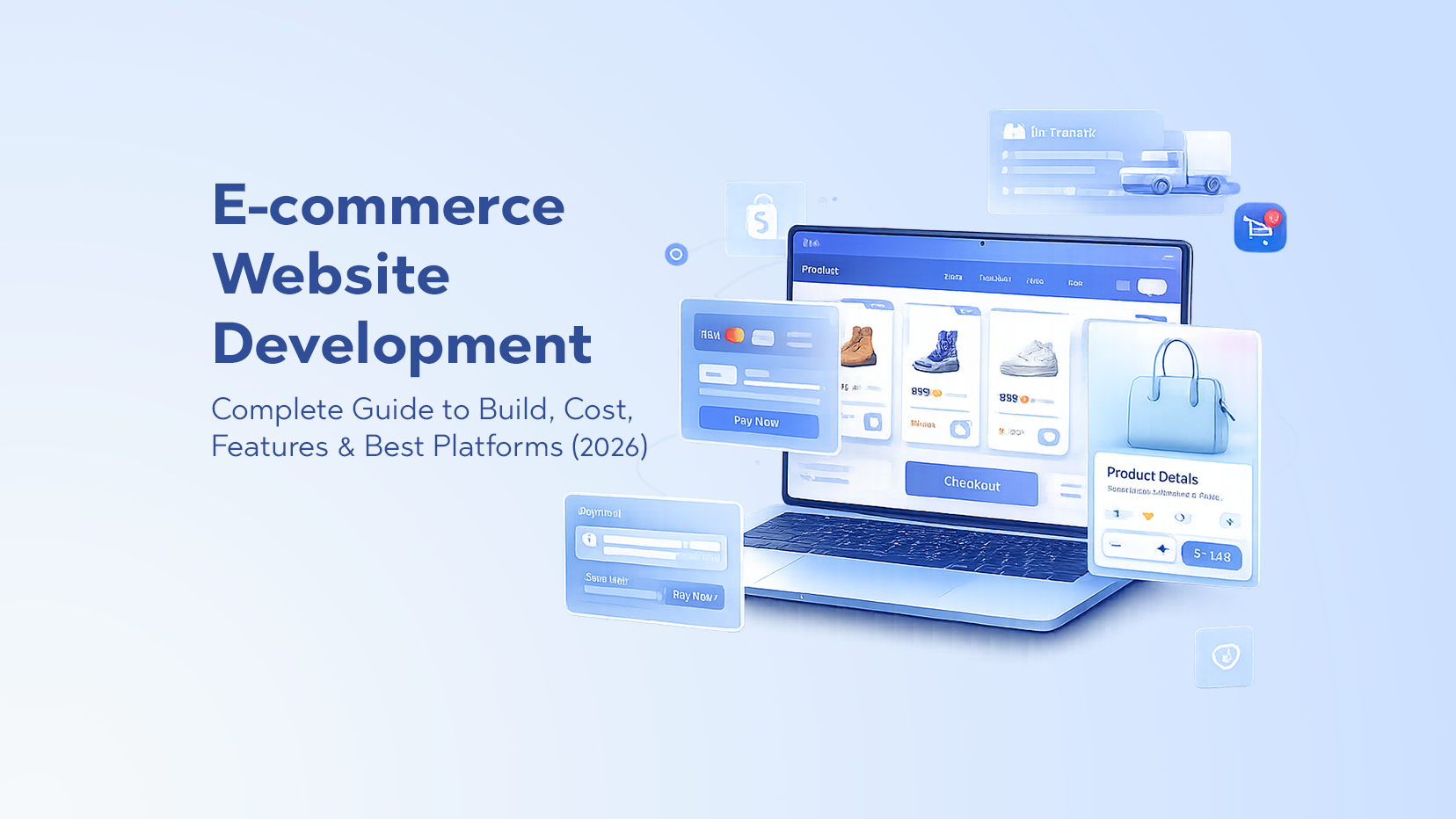
If you’re planning to sell online in 2026, one thing is clear—you need more than just a website. You need a powerful, conversion-driven e-commerce store that works like your best salesperson 24/7.
That’s where e-commerce website development comes in.
Whether you’re launching a new brand or scaling an existing business, this guide walks you through everything—from platforms and features to costs and trends.
At its core, ecommerce website development means building an online store where customers can browse products, make purchases, and interact with your brand seamlessly.
But there’s more beneath the surface.
It combines:
● Design (how your store looks)
● Development (how it works)
● Optimization (how it converts visitors into buyers)
A well-built store doesn’t just display products—it guides users, builds trust, and drives sales.
Key takeaway: E-commerce website development involves creating and optimizing online stores using platforms such as Shopify or WooCommerce, with a focus on user experience, scalability, and conversions.
The digital marketplace is evolving fast. Businesses that don’t adapt risk falling behind.
Here’s why investing in ecommerce website design matters now more than ever:
Consumers prefer convenience. They want to shop anytime, anywhere.
Most users browse and buy through smartphones. If your site isn’t mobile-friendly, you’re losing customers.
From local stores to global brands, everyone is shifting online. Competition is fierce—your website must stand out.
If you want to explore the benefits of e-commerce websites, check this:
Not all e-commerce stores are built the same. The right choice depends on your business goals, budget, and scalability needs.
Perfect for beginners and fast-growing brands.
● Easy setup
● Built-in features
● Minimal technical knowledge required
If speed matters, Shopify is your go-to option.
Ideal for businesses that want flexibility.
● Runs on WordPress
● Highly customizable
● Cost-effective
It gives you control, but you’ll need some technical know-how.
Built from scratch for unique business needs.
● Fully tailored design
● Advanced functionality
● High scalability
This option suits large businesses or startups with complex requirements.
You Can Check: Shopify vs WooCommerce vs custom comparison
Think of your website as a digital store. If it’s cluttered or slow, customers walk away.
Here’s what makes a difference:
● Mobile-responsive design Your site should look flawless on every device.
● Fast loading speed Even a one-second delay can reduce conversions.
● Secure payment integration Trust matters. Offer safe payment options.
● User-friendly navigation Make it easy to find products.
● Advanced search & filters Help users quickly discover what they need.
A great website doesn’t confuse users—it guides them smoothly from browsing to checkout. ecommerce website features
Building an online store isn’t random. It follows a structured process.
Define your goals, audience, and competitors.
Choose between Shopify, WooCommerce, or custom solutions.
Create an engaging and intuitive interface.
.webp)
Turn design into a functional website.
Fix bugs, improve speed, and ensure smooth performance.
Go live and start selling.
How to build an e-commerce websiteSimple in theory. Powerful in execution.
Let’s talk numbers.
The cost of e-commerce website development services varies depending on complexity, features, and platform.
Type | Cost Range |
|---|---|
Basic Website | ₹20,000 – ₹50,000 |
Mid-Level Store | ₹50,000 – ₹2,00,000 |
Advanced Store | ₹2,00,000+ |
What drives the cost?
● Design complexity
● Number of products
● Custom features
● Third-party integrations
If you’re serious about scaling, think of this as an investment—not an expense.
● Shopify – Best for ease of use
● WooCommerce – Best for flexibility
● Magento – Best for large enterprises
● Custom Development – Best for unique needs
Each platform has its strengths. The key is aligning it with your business goals.
Still wondering if it’s worth it?
Here’s what you gain:
Your store never sleeps. Customers can shop anytime.
Sell beyond your city—or even your country.
Lower operational costs compared to physical stores.
Track user behavior and improve strategies.
E-commerce isn’t just a trend—it’s a growth engine.
Even great businesses make Common E-commerce Website Mistakes to avoid
these pitfalls:
● Poor user experience Confusing layouts kill conversions.
● Slow website speed Users won’t wait. They’ll leave.
● Complicated checkout process Too many steps = lost sales.
● Lack of mobile optimization Mobile users dominate—don’t ignore them.
Fix these early, and your store will perform much better.
The future of E-commerce Trends in 2026 is exciting—and fast-changing.
● AI Personalization Websites adapt to user behavior in real time.
● Voice Commerce Shopping through voice assistants is growing.
● AR Shopping Experiences Customers can “try before they buy.”
● One-Click Checkout Faster buying equals higher conversions.
Staying updated isn’t optional—it’s essential.
Picking the right partner can save you time, money, and headaches.
Here’s what to look for:
● Experience & Portfolio Check past work. Results matter.
● Technology Stack Ensure they use modern tools.
● Support & Maintenance Post-launch support is crucial.
● Communication Clear communication avoids delays and confusion.
A good company doesn’t just build your website—they help grow your business.
Looking to build a high-converting online store?
You don’t have to do it alone.
Explore our e-commerce website development services
From strategy to launch, everything is handled with precision and creativity.
E-commerce is no longer optional—it’s essential.
With the right strategy, platform, and features, you can create a powerful online store that drives consistent growth.
Whether you’re starting small or aiming big, investing in e-commerce website development sets the foundation for long-term success.
It’s the process of building an online store where businesses can sell products or services digitally.
Costs range from ₹20,000 for basic sites to ₹2,00,000+ for advanced stores.
Shopify is great for beginners, WooCommerce offers flexibility, and Magento suits large businesses.
It usually takes 2 to 8 weeks, depending on complexity and features.