

Rahul Guleria
SEO Executive
Creative,
Branding
& Growth
in the Global
Digital Ecosystem
If you’re launching a new store or upgrading an existing one, the features you choose will directly shape how people interact with your brand—and whether they buy or bounce.
Want a deeper dive into building your store from scratch?Learn the full process here: ecommerce website development
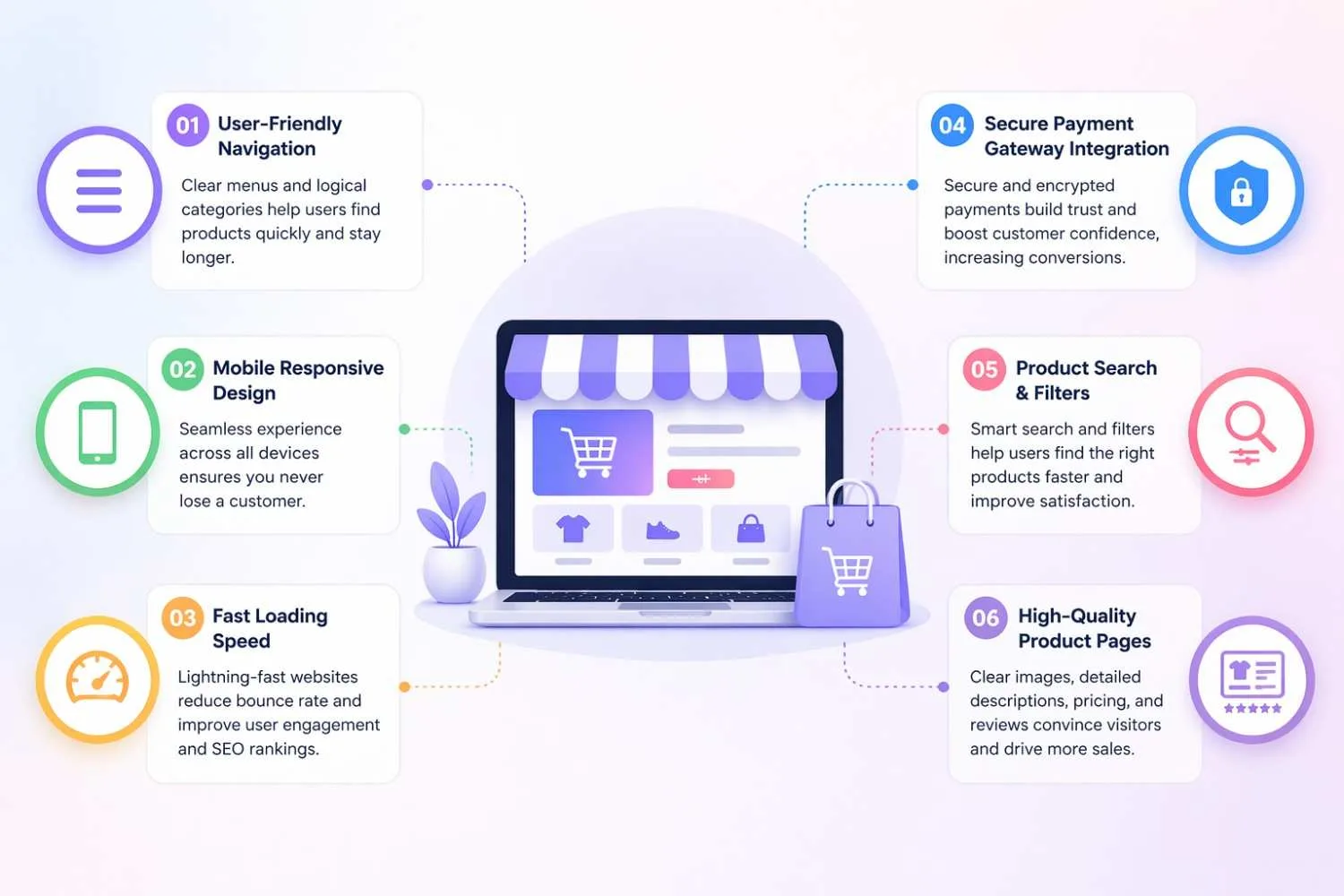
Think of these as your foundation. Miss one, and cracks start to show.
When visitors land on your site, they shouldn’t feel lost. Clear menus, logical categories, and intuitive layouts help users find products quickly. The smoother the journey, the higher the chance they’ll stay.
Most users browse on their phones. If your site doesn’t adapt seamlessly, you’re losing sales—simple as that. Responsive design ensures everything looks and works perfectly across devices.
Speed isn’t just a luxury. It’s a deal-breaker. Even a one-second delay can push users away. Fast websites keep visitors engaged and also rank better on search engines.
Trust is everything in e-commerce. Secure payment options reassure customers that their data is safe. Without this, conversions drop instantly.
Imagine walking into a store with no signs. That’s what poor search feels like. Filters, sorting options, and smart search features help users quickly find what they want.
Your product page is your salesperson. Sharp images, clear descriptions, pricing, and real reviews all work together to convince buyers.
Once your basics are solid, it’s time to level up.
Ever noticed how some stores seem to “know” what you want? That’s AI at work. It boosts average order value by suggesting relevant products.
Not everyone buys instantly. Giving users a way to save items keeps them connected to your store.
If you want global reach, your store must speak your customer’s language—literally and financially.
Running out of stock without knowing? That’s a nightmare. Smart inventory systems keep everything updated in real time.
Customers hate uncertainty. Order tracking gives them peace of mind and reduces support queries.
Sometimes users just need a quick answer. Instant support can be the difference between a sale and an exit.
Good design looks nice. Great UX sells.
Fewer steps mean fewer drop-offs. A streamlined checkout process keeps users focused and reduces cart abandonment.
Not everyone wants to create an account. Let them buy quickly without friction.
Buttons like “Buy Now” or “Add to Cart” should stand out and guide users naturally through the journey.
People trust people. Reviews, ratings, and security badges help eliminate doubts.
When customers know they can return products easily, they’re more likely to buy in the first place.
Improve your store design here:
Want to apply these UX strategies to your store?
Even the best store won’t sell if no one finds it.
Clean, readable URLs improve both rankings and user trust.
Structured data helps search engines understand your products better—and can boost visibility.
Your title and description act like your storefront on search engines. Make them count.
Alt text improves accessibility and helps your images rank in search results.
Guide users—and search engines—through your site with smart linking.
Google rewards speed and usability. Optimizing these metrics can push your rankings higher.
Avoid common SEO mistakes: ecommerce website mistakes
These are your secret weapons. Small tweaks. Big impact.
Ready to build a high-converting online store packed with powerful features?
Let’s turn your store into a sales machine.
A strong e-commerce site needs navigation, mobile responsiveness, fast speed, secure payments, product search, and SEO optimization.
One-page checkout, fast loading speed, clear CTAs, and trust signals like reviews have the biggest impact.
Most users shop on mobile. A poor mobile experience leads to lost sales and higher bounce rates.
Absolutely. Without SEO, your store won’t rank, and customers won’t find you.