

Rahul Guleria
SEO Executive
Creative,
Branding
& Growth
in the Global
Digital Ecosystem
At its core, contextual advertising is the art of placing ads where they naturally fit. Instead of bombarding users with irrelevant promotions based on their browsing history, contextual ads look at the content someone is consuming in real time. The idea is simple: align the ad with the context of the page, and it feels more useful and less intrusive.
Imagine you’re reading an article on The Top 10 Hiking Trails in Europe. Instead of seeing a random car insurance ad, you spot promotions for hiking boots, backpacks, and eco-friendly tents. Suddenly, the ad feels helpful—it’s tied to what you’re actually interested in at that moment.
This approach isn’t new. Traditional contextual targeting has been around for years, mostly relying on keywords and categories. Yet, as privacy regulations tightened and third-party cookies crumbled, contextual advertising made a powerful comeback—this time supercharged by AI.
Here’s a quick breakdown of how traditional contextual targeting worked before AI stepped in:
The system worked, but it wasn’t perfect. Keyword matching often missed nuance. For instance, a page discussing “running from problems” could mistakenly trigger ads for running shoes. That’s where AI in contextual advertising changes the game.
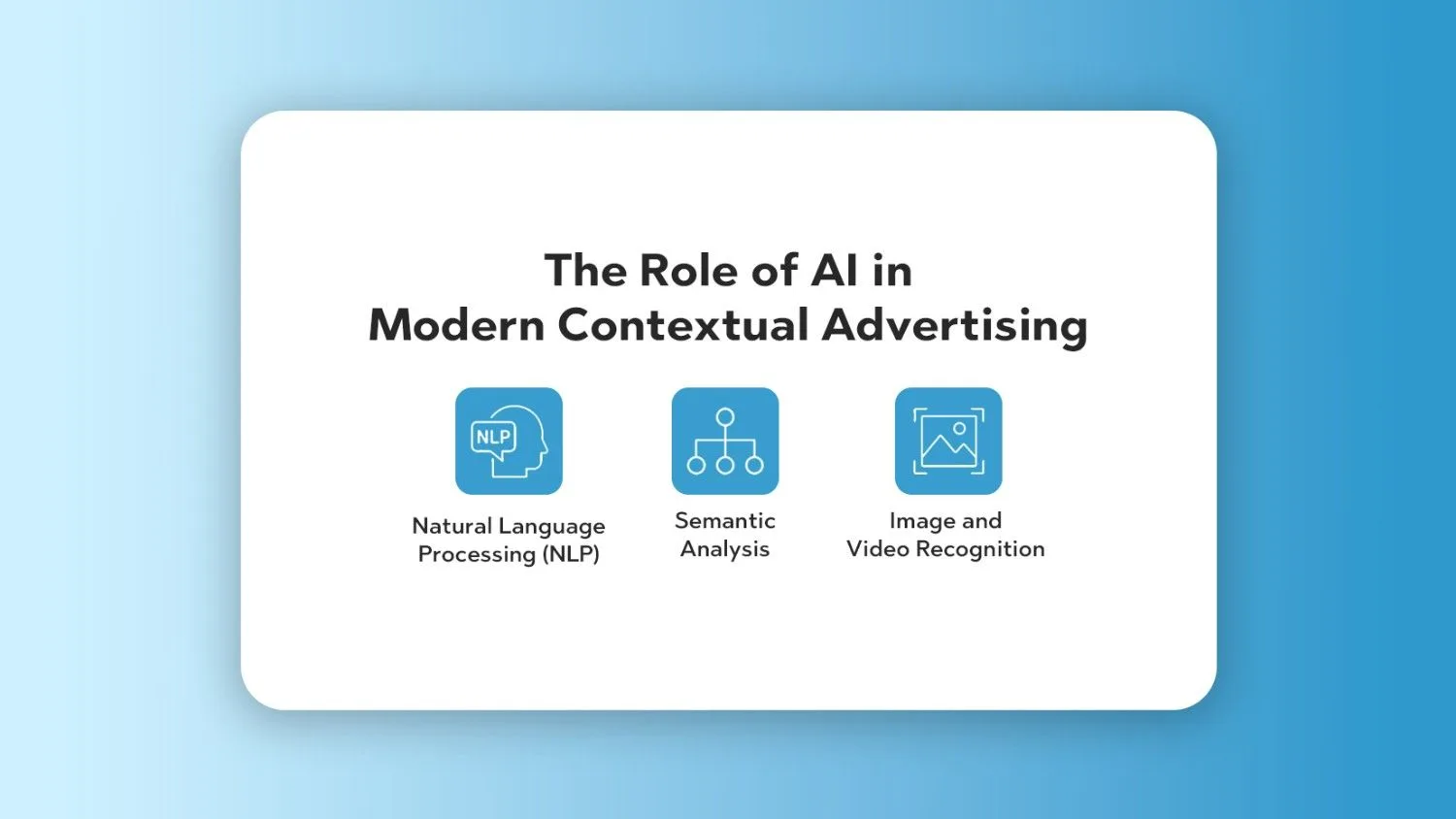
Artificial Intelligence isn’t just a buzzword in advertising—it’s the engine transforming how contextual targeting works today. Traditional contextual ads relied heavily on keywords and basic categories. That worked fine for simple matches, but it often fell short in accuracy. For example, a page about “running a business” might trigger ads for running shoes. AI solves that gap by understanding context, meaning, and intent.Modern AI in contextual advertising brings together advanced tools like Natural Language Processing (NLP), semantic analysis, and image recognition to make smarter ad placements. These tools allow ads to fit seamlessly into the user’s journey, boosting both engagement and trust.
NLP allows AI to understand text the way humans do—by looking at tone, sentiment, and meaning, not just surface-level keywords. For instance, an article titled “The Dark Side of Energy Drinks” might still mention “energy drinks” multiple times, but NLP ensures ads for healthy beverages appear instead of irrelevant promotions for energy drinks themselves.
Semantic analysis digs deeper by identifying themes, intent, and relationships between words. If a blog discusses “eco-friendly travel,” AI recognizes the broader theme and matches ads for sustainable hotels or carbon-neutral airlines rather than generic flight offers.
Modern content isn’t just text. People consume visuals, short videos, and live streams daily. AI tools can scan images and videos to detect context—like spotting a basketball court in a YouTube clip and matching it with sports gear promotions.By combining these tools, AI ensures ads are more than just relevant—they’re appropriate to the content and mindset of the user.
Another powerful role of AI lies in real-time adaptability. Unlike old-school contextual targeting that stayed static, AI enables ads to shift dynamically as users browse or as content evolves.
This flexibility keeps campaigns more effective and ensures ads never feel out of place or tone-deaf.
Take YouTube advertising. A cooking channel showing a pasta recipe could be a perfect spot for ads about fresh ingredients or cookware. With AI, the system doesn’t just read the video title—it recognizes visuals of boiling pasta, identifies keywords in closed captions, and even picks up on audio mentions of “vegan options.” The result? Ads for vegan cheese appear at the right time, reaching users in the perfect mindset to engage.In short, AI in contextual advertising shifts the focus from broad keyword targeting to smart, context-aware, real-time ad placement. It’s not just about placing ads where they might fit—it’s about ensuring they’re meaningful, timely, and aligned with the user’s mindset.
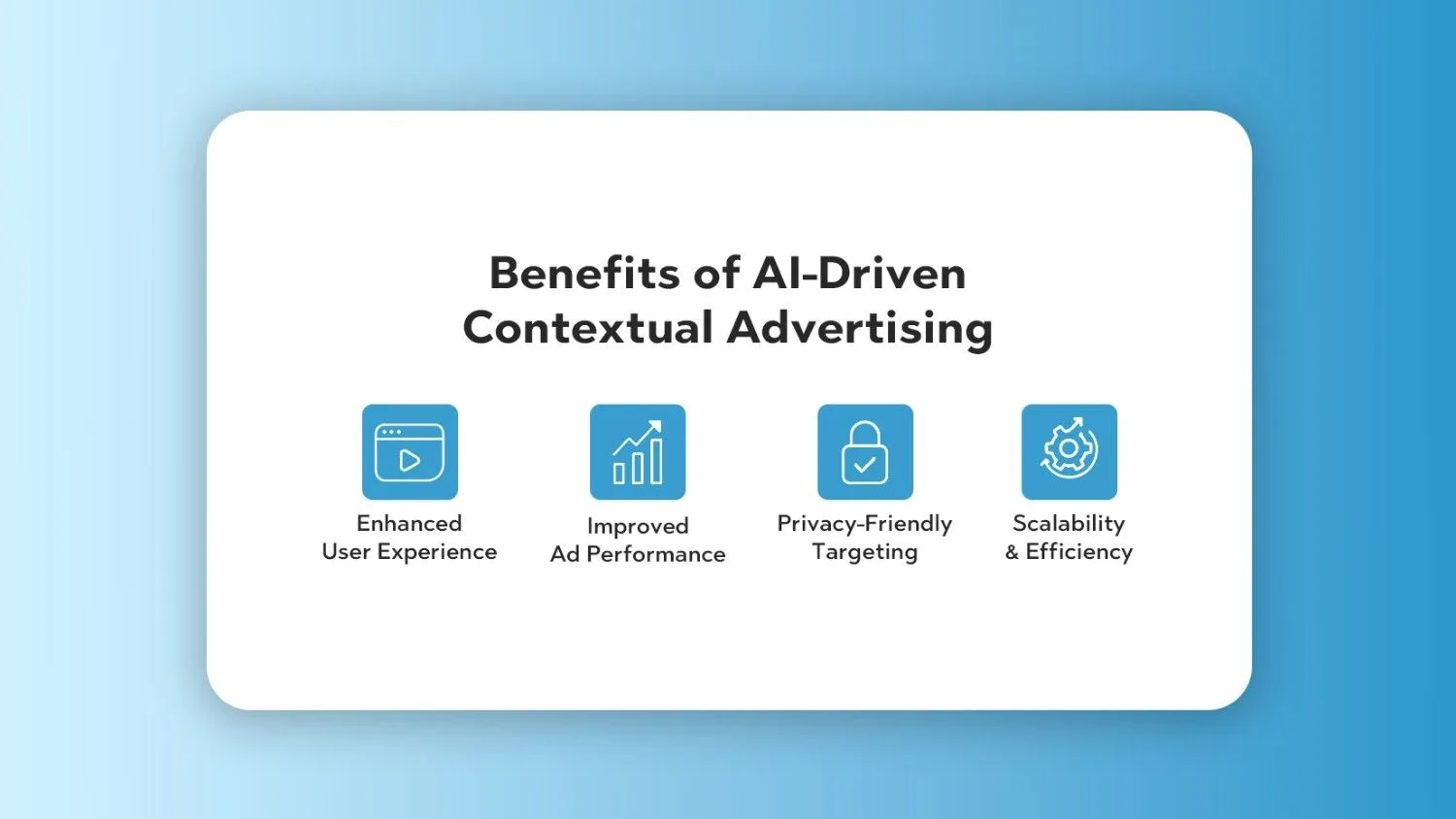
Brands aren’t adopting AI for contextual advertising out of curiosity—they’re doing it because it delivers results. Let’s look at why.1. Enhanced User Experience
2. Improved Ad Performance
3. Privacy-Friendly Targeting
4. Scalability & Efficiency
Want to understand the foundation of digital advertising? Explore our guide on what is Paid Media Advertising.
The advertising world often pits these two targeting approaches against each other. Let’s unpack the key differences.FeatureContextual AdvertisingBehavioral AdvertisingFocusPage contentUser’s online behaviorData UsedKeywords, themes, sentimentBrowsing history, cookiesPrivacyHigh (no personal tracking)Lower (relies on data collection)ExampleA travel article showing hotel adsSeeing hotel ads after googling vacationsWhy contextual is rising again: With third-party cookies fading out, brands need privacy-friendly alternatives. Contextual targeting, powered by AI, is stepping in as the ethical and effective solution.
AI isn’t just theory—it’s already transforming ad campaigns across industries.
To succeed with AI-driven contextual advertising, brands should follow these strategies:1. Choose platforms with strong AI capabilitiesLook for solutions that use NLP, semantic analysis, and visual recognition.2. Focus on intent, not just keywordsMatch the ad to what the content means, not just what it says.3. Prioritize compliance and brand safetyDefine clear suitability parameters and monitor placements.4. Regularly monitor relevance & CTRTrack performance, run A/B tests, and refine campaigns.5. Blend AI with human creativityLet AI handle data crunching, but keep messaging authentic with human insights.
AI is reshaping contextual advertising into something smarter, more effective, and more ethical. Instead of spying on users, it respects their privacy while still delivering relevance.In a cookieless world, the winning formula is clear: contextual + AI = the future of ethical targeting.
Contextual advertising places ads based on the content of a webpage, not user history.
AI uses NLP, image recognition, and semantic analysis to make ads more precise and relevant.
Yes, especially in a cookieless world. It’s privacy-friendly and often just as effective.
It allows relevance without relying on invasive user data.
NLP, machine learning, semantic analysis, and image/video recognition.
It interprets meaning and sentiment, not just keywords.
Yes, particularly when users are actively engaged with related content.
Higher relevance, improved CTR, stronger ROI, privacy compliance, and scalability.
Absolutely. It doesn’t rely on personal data or cookies.
Major platforms like Google, YouTube, and emerging programmatic tools already do.