
Rahul Guleria
SEO Executive
Creative,
Branding
& Growth
in the Global
Digital Ecosystem
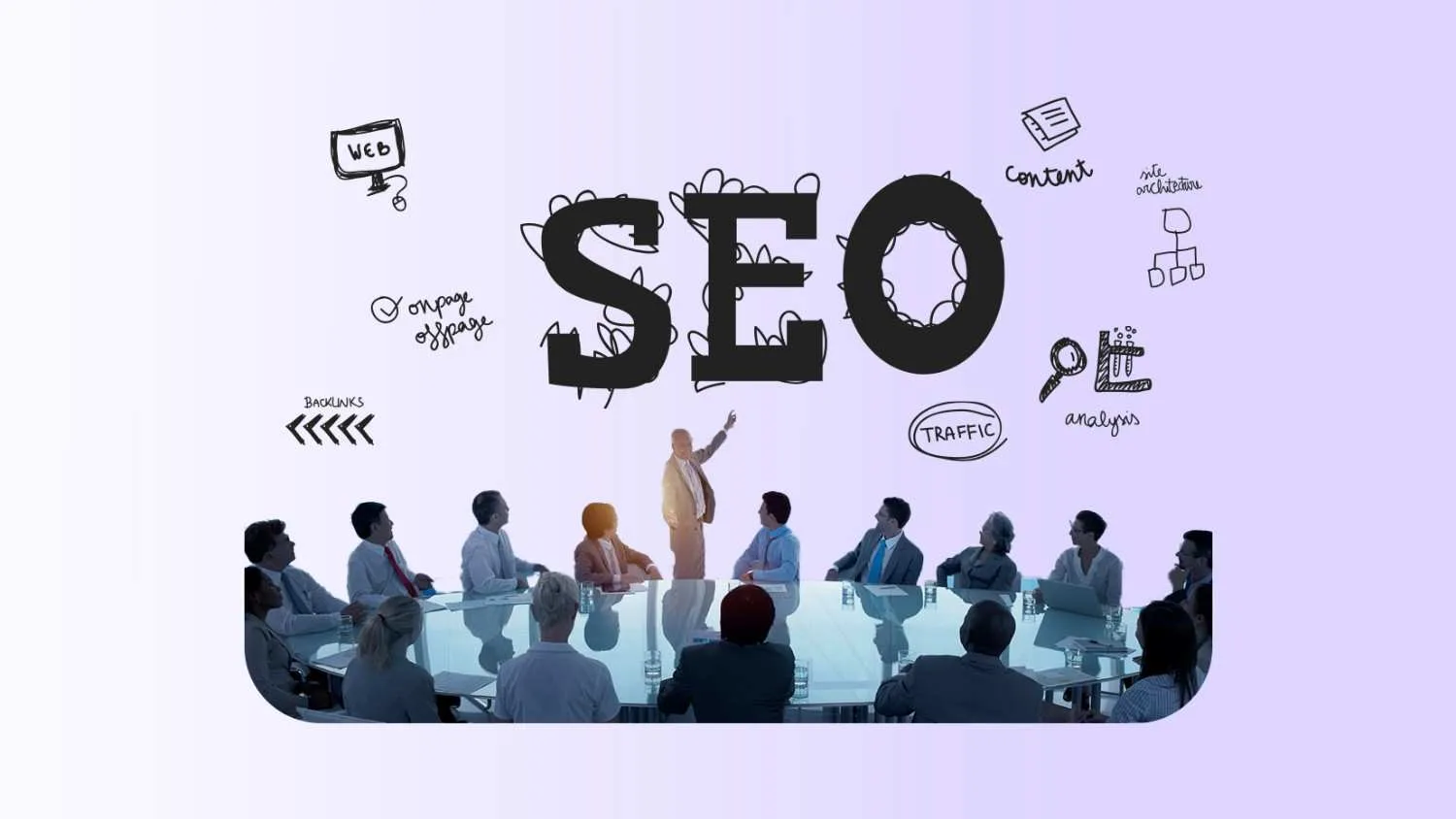
Search Engine Optimization (SEO) is the process of improving a website’s visibility on search engines like Google. It helps businesses attract organic traffic, build trust, and increase conversions. With the right SEO strategies—like keyword optimization, quality content, and backlinks—companies can reach their target audience cost-effectively and stay ahead in competitive markets.
SEO stands for Search Engine Optimization. It's the practice of improving your website so it shows up higher in the organic (unpaid) results of search engines like Google.
SEO is about aligning your site with how people search. It’s a long game—but one that pays off.
Let’s break this down step-by-step:
Search engines send bots (also called spiders) to scour the internet for new and updated content. These bots discover pages by following links.
Once found, the content is analyzed and stored in a massive database—the index. If your page isn't indexed, it won't show up in search results.
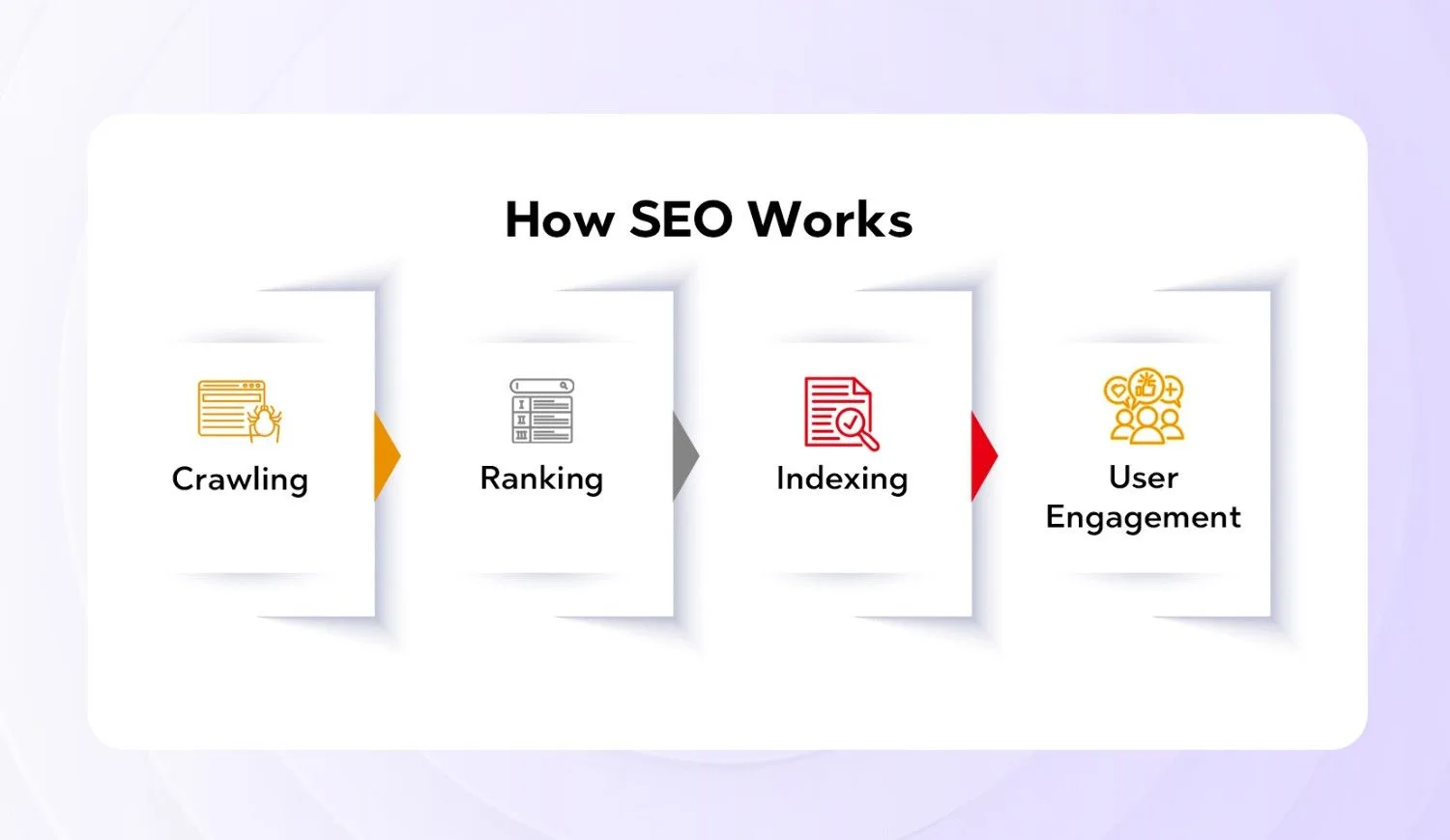
Search engines use complex algorithms to decide which pages are most relevant to a user's query. This is where your SEO work pays off. Pages are ranked based on relevance, authority, user engagement, and technical performance.
Google looks at how users interact with your site. Metrics like click-through rate (CTR), bounce rate, and dwell time help search engines decide whether your content is actually useful.
If your website doesn’t appear on page one of Google, most people will never find it. SEO helps place your business where your customers are already searching.
SEO targets people who are actively looking for what you offer. They aren’t just browsing—they’re ready to take action.
Once your content ranks, it keeps working for you.
Ranking well signals that you’re a credible source.
Good SEO isn’t just for bots. It makes your website easier to use too.
Businesses that invest in SEO pull ahead of those that don’t.
If you're in a crowded space, SEO gives you the edge.
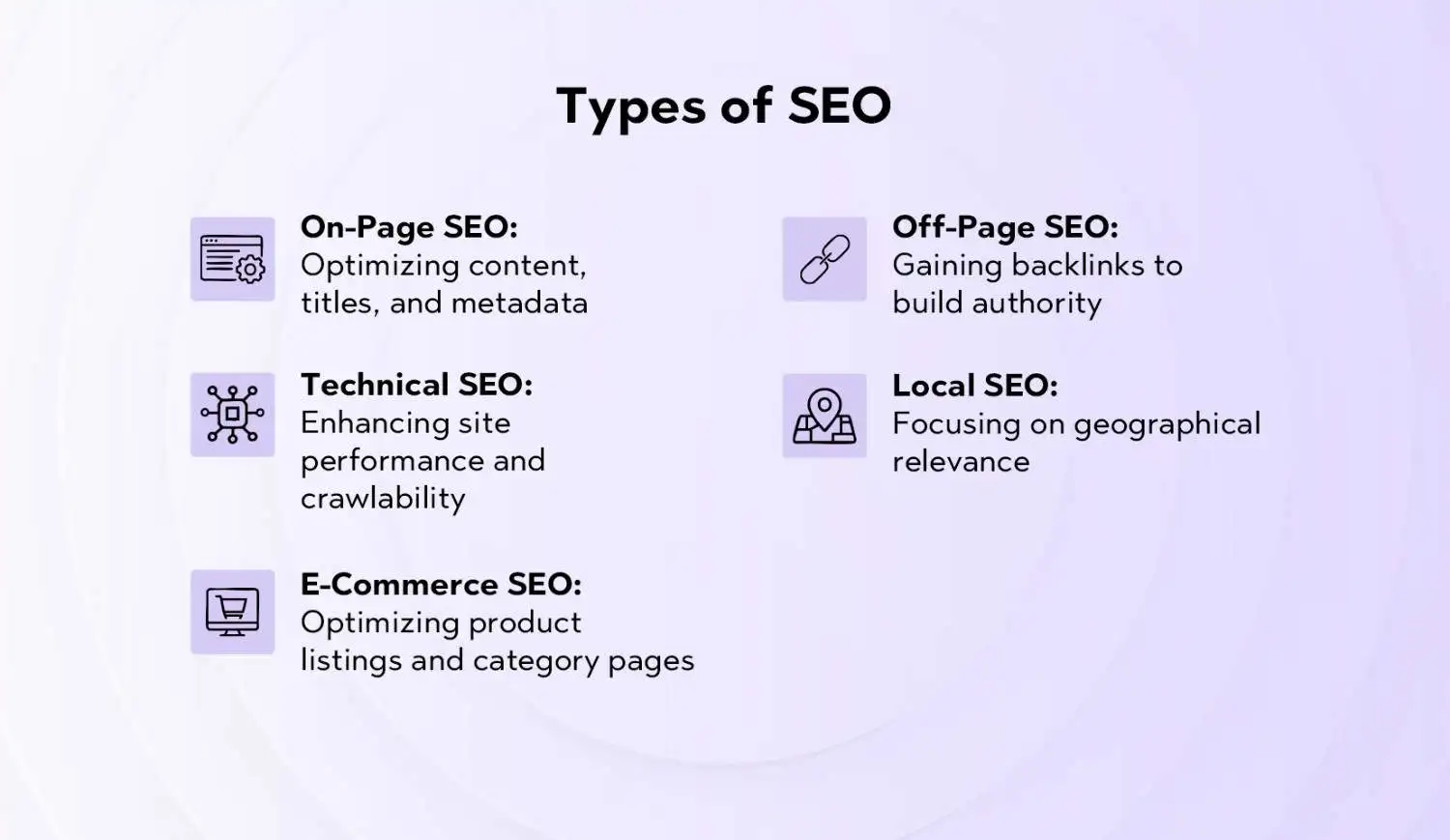
SEO Type | Description | Example |
|---|---|---|
On-Page SEO | Optimizing content, titles, and metadata | Keyword placement in blogs |
Off-Page SEO | Gaining backlinks to build authority | Guest posts, PR |
Technical SEO | Enhancing site performance and crawlability | Sitemap, mobile optimization |
Local SEO | Focusing on geographical relevance | Google Business Profile |
E-Commerce SEO | Optimizing product listings and category pages | Structured data, product schema |
Want to explore our full Search Engine Optimisation services? We’ve got you covered.
Aspect | SEO | Paid Ads |
|---|---|---|
Cost | Free (organic) | Paid per click/impression |
Results | Long-term growth | Quick but temporary |
Traffic | Consistent and scalable | Stops when budget runs out |
Trust Factor | Higher (earned ranking) | Moderate (sponsored placement) |
ROI Timeline | Gradual, builds over time | Immediate but short-lived |
Paid ads stop the moment you pause your spend. SEO keeps working.
Fixing these can significantly boost your visibility.
SEO isn’t just a buzzword. It’s the digital backbone of modern business visibility. When your website ranks, you get seen, trusted, and chosen—without paying every time someone clicks. Whether you're running a startup or a decades-old business, SEO helps you grow smarter, not just harder.
The best time to start? Yesterday. The second-best time? Today.
Need help? Explore our search engine optimisation services at PulsePlay Digital and start making your site work harder for your business.
SEO is about improving your site to rank higher in search results. It works by making your site more accessible, relevant, and trustworthy.
It increases your visibility, brings in high-quality leads, and builds trust—all without constant ad spending.
Typically 3–6 months, depending on competition and strategy.
On-page, off-page, technical, local, and e-commerce SEO.
For long-term growth, yes. But a hybrid strategy often works best.
Absolutely. Local and niche SEO is tailor-made for small businesses.
It varies. Some handle it in-house, while others invest in agencies. ROI tends to justify the cost.
Google Search Console, Ahrefs, SEMrush, Moz, Screaming Frog, and others.
At least quarterly. Search trends and algorithms evolve quickly.
Yes. Consistently showing up in search results builds brand recognition and authority.