Paid social media advertising means paying social platforms like Facebook or LinkedIn to promote your content directly to targeted audiences. Unlike organic posts, which rely on algorithms and user interactions to get seen, paid ads cut through the noise and land right in front of the right people.
Organic vs Paid: What's the Difference?
Organic social media marketing grows through unpaid strategies—like consistent posting and community interaction.
Paid social media ads involve putting money behind your content to push it out faster, farther, and more effectively.
Why is Paid Advertising Important in Social Media Marketing?
Organic reach has taken a hit. Algorithms prioritize personal content, not business pages. Even if you post regularly, only a small percentage of followers see it.
Paid Social Media Advertising Solves This:
Greater Reach: Paid ads guarantee visibility, even with a small follower base.
Hyper-Targeting: Ads can reach users based on interests, demographics, behavior, and more.
Quick Impact: Get your message out immediately during promotions, events, or launches.
Scalability: Start small, scale once you find what works.
ROI Tracking: Platforms offer detailed analytics, so you know what's converting.
Social media ads run on auction systems where advertisers bid to show their ads. Each advertiser sets a goal—like conversions or clicks—and the system matches ads with users most likely to take action.
Common Bidding Models:
CPC (Cost-per-click): You pay when someone clicks on your ad. Ideal for traffic-focused campaigns.
CPM (Cost per 1,000 impressions): You pay for every thousand views, great for brand awareness.
CPA (Cost-per-acquisition): You pay only when someone completes an action, such as a signup or purchase.
Targeting Options:
Interest-Based: Target users based on pages they follow or content they engage with.
Behavioral Targeting: Focus on users who recently searched, visited, or interacted in specific ways.
Location-Based: Geographically target your ideal audience.
Custom Audiences: Retarget existing customers.
Lookalike Audiences: Reach people similar to your current customers.
Ad Campaign Structure:
Campaign: The overarching goal (e.g., sales, leads).
Ad Set: Settings like audience, budget, placement, and schedule.
Ad: The creative element that people see (images, copy, video).
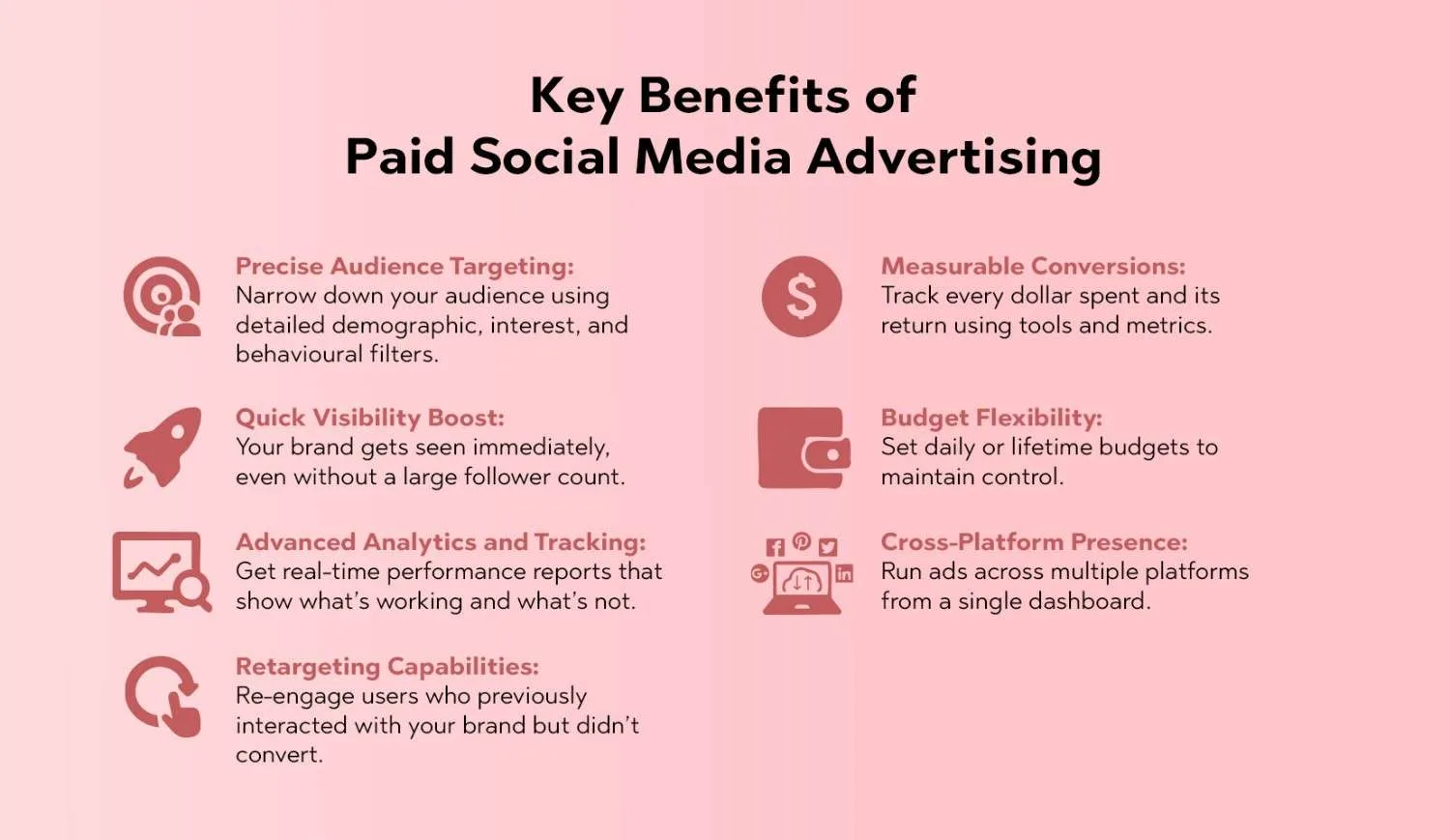
Key Benefits of Paid Social Media Advertising
Paid social campaigns offer a long list of tangible benefits that help businesses grow fast and smart:
Precise Audience Targeting: Narrow down your audience using detailed demographic, interest, and behavioural filters.
Quick Visibility Boost: Your brand gets seen immediately, even without a large follower count.
Advanced Analytics and Tracking: Get real-time performance reports that show what’s working and what’s not.
Retargeting Capabilities: Re-engage users who previously interacted with your brand but didn’t convert.
Measurable Conversions: Track every dollar spent and its return using tools and metrics.
Budget Flexibility: Set daily or lifetime budgets to maintain control.
Cross-Platform Presence: Run ads across multiple platforms from a single dashboard.
Types of Paid Social Media Ads
Different platforms offer ad formats tailored to their users' behavior and preferences. Here’s a breakdown:
Facebook & Instagram:
Carousel Ads: Showcase multiple images/videos in one ad.
Video Ads: Ideal for storytelling and engagement.
Lead Ads: Capture user info directly within the platform.
LinkedIn:
Sponsored Content: Native ads that appear in the feed.
Sponsored InMail: Personalized messages sent to LinkedIn inboxes.
Text Ads: Lightweight ads that appear on the sidebar.
X (Twitter):
Promoted Tweets: Amplify the reach of existing tweets.
Twitter Amplify: Video ads placed alongside premium content.
YouTube:
Skippable In-Stream Ads: Viewers can skip after 5 seconds.
Non-skippable In-Stream Ads: Full ad plays before the video.
Discovery Ads: Appear in YouTube search results and recommended videos.
Paid vs. Organic Social Media: What’s the Difference?
While both are essential, they serve different purposes:
1. Organic:
Free to post
Builds long-term trust and brand community
Slower reach, relies on engagement
2. Paid:
Requires a budget
Delivers fast results
Offers detailed targeting and measurable outcomes
3. Hybrid Strategy:
Combine both to:
Build lasting relationships (organic)
Drive short-term conversions and visibility (paid)
How to Create an Effective Paid Social Media Strategy
A well-planned strategy ensures your budget works harder:
Define Your Campaign Goals: Know whether you're aiming for clicks, sales, leads, or awareness.
Choose the Right Platform: Match your audience to the platform's user base.
Set Audience Targeting: Use demographics, interests, behaviors, and custom data.
Create Ad Creatives and Copy: Develop scroll-stopping visuals and clear, persuasive copy.
Set Budget and Schedule: Define how much and how long you want to run the campaign.
Monitor and Optimize Performance: Use analytics to tweak your ad sets, targeting, and content.
Using AI in Paid Social Media Advertising
AI is revolutionizing how marketers run ad campaigns, making them smarter and more efficient.
AI Applications in Paid Ads:
Ad Copywriting and Creatives: Tools like Jasper and AdCreative.ai generate headlines, ad text, and visuals based on top-performing patterns.
Predictive Analytics: AI forecasts which audiences are likely to convert and where budget should go.
Audience Segmentation: Automatically groups your audience for better targeting.
Bid Optimization: Adjusts bids in real-time to get better results for less.
Top Tools Using AI:
Meta Advantage+: Uses AI to deliver high-performing ad combinations.
Google Performance Max: Optimizes ads across all Google platforms.
Jasper: AI copywriting for ad content.
AdCreative.ai: Automatically creates conversion-optimized ad creatives.
Measuring Performance and ROI
Tracking the success of your campaigns is vital to ensure a strong return.
Important Metrics:
CTR (Click-through Rate): Measures how many people click your ad.
CPC (Cost per Click): The price paid per ad click.
Conversion Rate: How many actions (purchases, signups) your ad generates.
ROAS (Return on Ad Spend): Revenue generated vs. money spent.
Engagement Rate: Likes, comments, shares on your ads.
Tools to Track ROI:
Meta Ads Manager
Google Analytics
How to Use Data:
Use reports to find high-performing ads, ditch the underperformers, and test new creative angles.
Common Mistakes to Avoid
Even experienced marketers slip up. Steer clear of these errors:
Poor Targeting or Unclear Goals: If you don’t know who you’re targeting or what you want, the ad won’t work.
Ignoring Creatives and Visuals: Weak or boring visuals get skipped instantly.
Skipping A/B Testing: Always test variations to discover what converts best.
Not Reviewing Performance: Analytics are your best friend. Check them regularly.
Lack of Ad Refreshing: Avoid ad fatigue by rotating creatives and messaging.
Future of Paid Social Media Advertising
Paid advertising continues to evolve with technology and user behavior.
What Lies Ahead:
AI-Driven Personalization: Ads that feel tailor-made based on user behavior and preferences.
AR/VR Integration: Augmented Reality ads are becoming popular on Instagram and Snapchat.
Privacy Regulations: As platforms tighten user data access, marketers must shift to contextual and ethical advertising.
Voice Search Ads: With the rise of smart devices, voice-activated ads may soon become the norm.
Conclusion
Paid social media advertising isn’t just a trend—it’s the engine behind most modern digital growth strategies. It offers speed, precision, and measurable results that organic content can’t always deliver alone.
But don’t ditch organic. The best brands blend both—building relationships and driving ROI.
Success lies in testing, learning, and staying ahead of the curve.