
Rahul Guleria
SEO Executive
Creative,
Branding
& Growth
in the Global
Digital Ecosystem
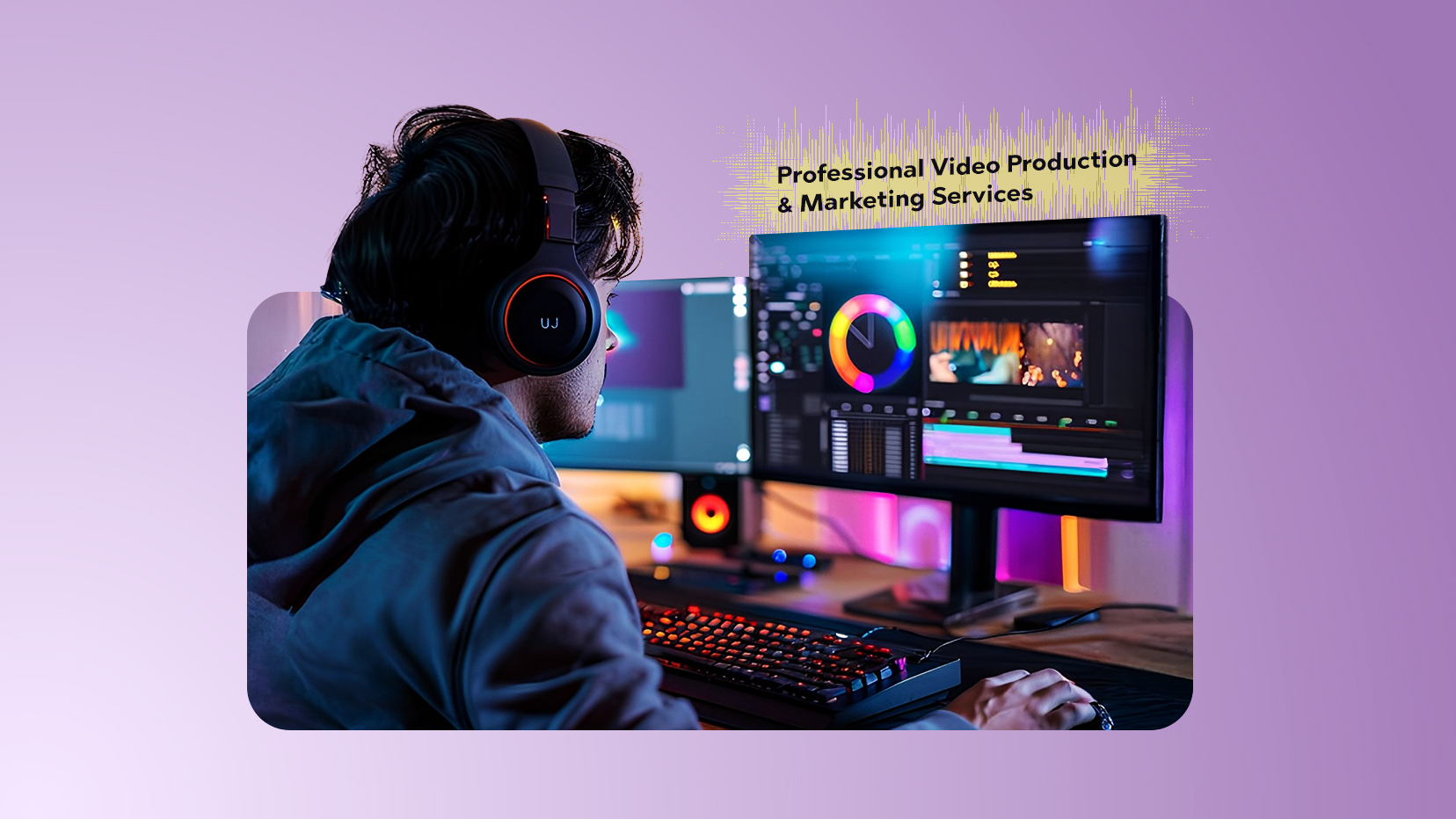
Professional Video Production and Video Marketing are no longer “nice-to-have” side projects. They sit at the heart of how modern brands tell their stories, win attention, and turn that attention into measurable business growth.
Whether you run a startup, a scaling mid-size brand, or an established enterprise, high-quality Corporate Video Production can do heavy lifting for you:
● Explain complex products in minutes
● Build trust with decision-makers
● Capture events and milestones
● Fuel your social media and performance marketing campaigns
This in-depth guide walks through how Professional Video Production works, how it connects with Video Marketing, and how a Business Video Production Company helps you move from “we should do more video” to a predictable, ROI-driven content engine.
You’ll see:
● What Professional Video Production & Marketing Services include
● How the process works from idea to final edit
● Key benefits for brand awareness, engagement, and revenue
● How to use video across platforms like YouTube, Instagram, and LinkedIn
● Why partnering with a specialist team beats going fully DIY
Let’s start with the basics.
Professional Video Production & Marketing Services combine storytelling, technical production, and strategic distribution to help brands create videos that not only look polished but also deliver outcomes.
Instead of thinking about “one video at a time”, you treat video as an always-on asset in your marketing and sales stack.
At its core, Professional Video Production covers everything required to turn a concept into a finished video:
● Strategy and messaging
● Scripting and storyboarding
● Filming on-location or in studio
● Voiceovers, graphics, animations
● Editing, sound design, color grading
● Optimising formats for different platforms
Video Marketing then picks up from there and focuses on:
● Where those videos live (website, landing pages, email, social)
● How people discover them (SEO, social, ads, partnerships)
● How you measure performance (views, watch time, leads, sales)
● How you repurpose content across many touchpoints
Together, Professional Video Production and Video Marketing form a full funnel system that supports awareness, consideration, and conversion.
Different goals demand different video formats. A good Business Video Production Company helps you choose the right mix instead of pushing whatever is easiest to produce.
Here are the main types you’ll typically see.
Corporate Video Production focuses on communicating your brand story, values, and capabilities. These videos often live on your homepage, “About” page, or investor decks and help answer the simple question: “Who are you and why should I trust you?”
Common corporate formats include:
● Brand films and company profiles
● Vision, mission, and culture videos
● CEO or leadership message videos
● Recruitment and employer branding content
These pieces build credibility and show the people and beliefs behind your logo.
Promotional videos highlight a specific offer, product, feature, or campaign. Think of them as your sales team on autoplay.
Examples:
● Product demos and explainers
● Feature walkthroughs
● Offer launch videos
● Discount or seasonal campaign promos
Here you lean heavily on benefits, use cases, and proof so that viewers understand exactly why they should take action.
If your brand invests in events—conferences, launches, internal town halls, customer meetups—capturing them on video multiplies the impact.
Event videos can:
● Turn a one-day event into evergreen marketing content
● Give remote teams and stakeholders a front-row seat
● Showcase your thought leadership, partnerships, and scale
Later in this guide, we’ll connect this to Corporate Event Video Best Practices and how to get more from every event you run or sponsor.
Finally, there’s the world of short-form content built for feeds and stories. Social-first Video Production focuses on:
● Reels and short vertical clips
● Behind-the-scenes snippets
● Founder POVs and talking-head videos
● Quick tips, “how-to” breakdowns, and hooks
This is where Video Marketing really shines because you’re designing content for how people actually consume media: fast, mobile-first, and in short bursts.
A strong Professional Video Production partner helps you plan a content stack that covers all four: corporate, promotional, event, and social—without burning out your team.
Let’s walk through the journey from “we should make a video” to “we have a library of assets that keep driving results”.
Most Professional Video Production workflows follow three big stages:
Pre-production is where you decide what you’re making and why. It saves time, money, and headaches later.
Key steps include:
● Goal setting – Are you trying to drive sign-ups, build awareness, or onboard new customers?
● Audience clarity – Who will watch this? What do they care about? What objections are they holding?
● Core message and concept – What’s the one idea viewers must remember?
● Script and storyboard – What will they see and hear, scene by scene?
● Logistics – Locations, talent, permissions, schedules, equipment, and backup plans.
When you create Engaging Corporate Videos for your brand, pre-production is where you lock in the narrative. You map out your brand story, define which leaders or employees will appear on camera, decide on testimonials, and align the visual style with your brand identity. This upfront clarity means your shoot day runs like clockwork and your final corporate film resonates instead of feeling generic.
Production is the “on set” phase. This is where the planning turns into footage.
A Professional Video Production team handles:
● Camera setup, lenses, angles, and movement
● Lighting design that flatters people and enhances the mood
● Audio capture (lav mics, boom mics, room treatment)
● Directing talent so they feel comfortable and natural
● Capturing b-roll that tells the story visually
For corporate content, production may involve filming at your office, factory, campus, or client locations. For promotional content, it might include product close-ups, screen recordings, or staged scenarios that demonstrate real-world usage.
Because the technical details sit with your production crew, your internal team can focus on performance, messaging, and stakeholder alignment instead of worrying about shutter angles or color temperatures.
Once the shoot wraps, the heavy lifting moves to the edit suite.
Post-production includes:
● Reviewing and selecting the best takes
● Structuring the narrative arc
● Adding titles, graphics, and lower-thirds
● Motion graphics and simple animations
● Sound design, music, and audio clean-up
● Color correction and grading
● Exporting multiple versions for web, social, and paid campaigns
This is also where you adapt core footage into different deliverables:
● A 90-second brand film
● A 30-second promo cut for performance ads
● A series of 15-second social clips
● A hero video for your website hero section
A Business Video Production Company that thinks strategically will always ask, “How else can we use this footage?” rather than handing over a single file. That mindset turns each shoot into a content library you can keep mining.
Brands that invest in Professional Video Production don’t just do it because videos look good. They do it because video impacts hard numbers—awareness, engagement, leads, and sales.
Let’s break down the main advantages.
Video combines visuals, voice, sound, and motion. That mix makes your brand easier to remember compared to static text or images alone.
High-quality corporate and promotional videos:
● Introduce your brand story in a way people actually finish
● Demonstrate your product or service in context
● Show the humans behind your logo, which builds trust
Over time, consistent Video Marketing across your website, emails, and social channels creates a recognisable brand language. People start to recognise your colors, tone, and point of view before they even see your logo.
Most platforms reward engaging video content. Video grabs attention more quickly than text-only formats and keeps people on your page or profile longer.
You can use Professional Video Production to:
● Turn blog posts into embedded explainers
● Replace long paragraphs on landing pages with concise demos
● Add motion to email campaigns with GIFs or short clips
● Boost engagement on social feeds through vertical videos
Longer watch times, more shares, and higher click-through rates don’t just look good in a dashboard. They also create more opportunities for your brand to start conversations and build relationships.
Video doesn’t stop at the top of the funnel. When used correctly, it becomes a powerful sales tool.
Examples:
● Product demos that answer common objections
● Testimonial videos that show real customers in their own words
● Walkthroughs that make onboarding smoother and reduce support tickets
● Personalized videos from sales reps to key prospects
Because video is easy to consume and share, it helps buyers move faster and with more confidence. That often leads to higher deal velocity and better close rates.
If you already invest in corporate events, trade shows, webinars, or internal conferences, Professional Video Production can multiply the impact of that spend.
With the right plan, you can:
● Capture talks, panels, and behind-the-scenes footage
● Turn highlight reels into promotional assets for future events
● Create snackable videos for social and email nurturing
● Document internal events to strengthen culture and hiring
To make the most of these opportunities, it helps to follow Corporate Event Video Best Practices that cover planning, shot lists, and on-site workflows. That way, your team walks away from every event with a library of footage instead of just a few photos and memories.
Video starts paying for itself when you connect it to a distribution and measurement strategy:
● You A/B test pages with and without explainer videos
● You track how promo videos perform in paid campaigns
● You measure watch time, click-throughs, and post-view conversions
● You evaluate which stories, formats, and hooks work best
A focused Video Marketing approach turns video from a “creative expense” into a growth channel with clear ROI numbers your leadership and finance teams can get behind.
You can produce the most beautiful video in the world. If no one sees it, it won’t move the needle.
Video Marketing focuses on getting your content in front of the right people, at the right time, on the right platforms—and then converting that attention into business outcomes.
Each platform has its own strengths. You don’t have to be everywhere from day one. You just need to pick the platforms that align with your audience and goals.
YouTube behaves like a hybrid of search engine and social network. It works particularly well for:
● In-depth explainers and tutorials
● Product demos and comparisons
● Customer stories and case studies
● Webinars and recorded talks
Because people often search with intent (“how to…”, “best…”, “review…”), YouTube videos can bring in consistent, long-term organic traffic if you optimise titles, descriptions, and thumbnails.
Instagram favors visual storytelling and short-form content. Brands rely on:
● Reels and stories for reach and discovery
● Carousels and posts for education and nurture
● Collaborations with creators and partners
Vertical videos with strong hooks in the first few seconds tend to perform best here. You can repurpose footage from your Professional Video Production shoots into bite-sized clips that keep your feed active without starting from scratch every time.
LinkedIn plays a central role for B2B brands and professional services. Here, video helps you:
● Share thought leadership from founders and leaders
● Break down complex solutions in simple language
● Humanise your team and culture for hiring and partnerships
Short, insight-driven videos often outperform generic promotional content because they provide value upfront and demonstrate expertise.
A mature Video Marketing plan usually combines both organic and paid strategies.
● Organic video builds authority and community over time. You publish consistently, respond to comments, and let algorithms surface your content to the right people.
● Paid video campaigns accelerate reach. You target specific audiences, test different creative, and optimise for conversions or leads.
For example, you might:
● Publish an in-depth product demo on YouTube and embed it on your website
● Cut shorter snippets for Instagram Reels and LinkedIn posts
● Run targeted video ads on Meta or LinkedIn to amplify the highest-performing clips
Once you understand which platforms and formats work best for your audience, you can double down with structured Social Media Video Marketing Strategies that align content, cadence, and campaigns with business goals. Internal data from these experiments becomes your playbook for future video investments.
With so many DIY tools and smartphone cameras available, you might wonder why brands still partner with Professional Video Production teams.
Here’s why it matters.
A good partner doesn’t start with “What can we film?” but with “What are you trying to achieve?”
They help you:
● Clarify video goals across the funnel
● Prioritise formats based on impact and budget
● Develop a content calendar that supports launches, events, and campaigns
● Align messaging with your brand positioning and tone
That strategy-first mindset ensures your investment in Corporate Video Production and promos leads to assets that stay useful for months or years, not just a single campaign.
Professional Video Production teams bring:
● High-end cameras, lenses, audio gear, and lighting
● Experienced directors, producers, and editors
● Motion graphics and animation capabilities
● A refined sense of pacing, composition, and storytelling
This doesn’t just make your videos “pretty”. It makes them consistent, credible, and aligned with your brand’s visual identity. That consistency builds trust, especially for premium or complex offerings.
In-house teams often juggle many priorities. Videos get pushed down the list, and projects stall.
A dedicated Business Video Production Company:
● Moves you through defined timelines and processes
● Plans shoots that capture multiple assets in one go
● Builds reusable templates for lower edit times
● Helps you repurpose footage across multiple platforms
You get more content, faster, without burning out your internal marketing team.
When you work with a team focused on Professional Video Production & Marketing Services, you’re not managing a dozen freelancers. You have one integrated partner that handles:
● Concept, scripting, and pre-production
● Filming, logistics, and coordination
● Editing, versioning, and optimisation
● Distribution guidance and performance reviews
That end-to-end ownership means fewer dropped balls and a much smoother experience for your stakeholders.
You can explore how a dedicated partner structures these Professional Video Production & Marketing Services to support branding, performance campaigns, and long-term content needs.
Let’s address the big question: should you do it yourself or bring in professionals?
There’s no single answer for every situation, but you can look at trade-offs across four dimensions: quality, speed, cost, and strategy.
DIY video works well when:
● You need quick, scrappy updates (behind-the-scenes clips, daily stories).
● A founder or team member is comfortable on camera and can self-shoot.
● The stakes are relatively low, like internal-only content or early experiments.
Modern smartphones shoot impressive footage, and simple editing apps make basic cuts, titles, and music accessible. For social-first “in the moment” content, DIY often feels more authentic and less scripted.
However, for key brand moments, Professional Video Production tends to deliver far more value:
● Flagship brand films and corporate videos – These define how the world sees your company. Compromising on quality here can hurt perception.
● High-impact product or service explainers – Viewers use these to decide whether to book a demo or make a purchase. Clarity and polish matter.
● Event coverage with many moving parts – You get one shot to capture key moments. Professionals plan angles, audio, backup gear, and contingencies.
● Campaign-specific promotional videos – When you’re investing media budget behind content, it should perform at its best creatively and technically.
Professional teams also bring structure: briefs, shot lists, scripts, schedules, and feedback loops. That structure saves time, reduces rework, and keeps stakeholders aligned.
Many brands choose a hybrid model:
● Use DIY for low-stakes, high-frequency social content.
● Invest in Professional Video Production & Marketing Services for core brand assets, major campaigns, and evergreen content.
This way, your internal team stays agile and human, while your most important videos project the level of quality and professionalism your brand deserves.
Professional Video Production and Video Marketing are no longer optional extras in a modern brand stack. They are essential tools for telling your story clearly, building trust at scale, and turning attention into results.
When you combine a strategy-first approach, strong production quality, and smart distribution across channels, your videos stop being isolated projects and become compounding assets that keep working for your business month after month
Professional video production & marketing services cover the full lifecycle of video content for your brand. That includes strategy, scripting, filming, editing, and distributing videos across channels like your website, email, and social media. The goal is not just to make videos look good but to support business objectives like awareness, lead generation, and sales.
Corporate Video Production costs vary depending on scope. Factors include video length, number of shoot days, locations, talent, animation needs, and how many final deliverables you require. A simple talking-head video with light editing sits at the lower end, while multi-location shoots with motion graphics and multiple versions for different platforms cost more. The right partner will help you prioritise impact and design a package that fits your budget and goals.
Timelines depend on complexity and approvals. As a rough guide:
● Simple promotional videos with existing footage can take 1–2 weeks.
● New shoots with scripting, filming, and editing may take 3–6 weeks.
● Larger campaigns with multiple videos, locations, and languages can take longer.
A structured process with clear milestones for scripting, filming, rough cuts, and final approvals keeps everyone aligned and avoids last-minute rushes.
Yes. Professional Video Production teams that also specialise in Video Marketing can support social media end-to-end. That includes:
● Planning content tailored to each platform
● Adapting horizontal footage into vertical and square formats
● Creating hooks, subtitles, and call-to-actions optimised for feeds
● Supporting paid campaigns with creative variations and testing
This combination ensures your videos are not only well-produced but also designed to perform in real-world social environments.
The main benefits include:
● Stronger brand perception and trust
● Higher engagement on websites and social platforms
● Better conversion rates through product demos and testimonials
● More value from events and campaigns through reusable footage
●Clearer ROI when videos are tied to measurable metrics like leads, sign-ups, or sales
Overall, Professional Video Production turns video from “nice content” into a strategic asset for growth.
Start by working backwards from your goals:
● Need awareness? Focus on brand films, thought leadership, and top-of-funnel social content.
● Need leads? Invest in product explainers, case studies, and landing page videos.
● Need to close deals faster? Create demos, objection-handling videos, and personalised sales content.
Then pick platforms where your audience actually spends time and build a Video Marketing plan that mixes organic posting with strategic paid amplification.
For brand promotion, a mix often works best:
● Corporate brand films that tell your story
● Short promos that highlight specific offers or features
● Customer testimonials that provide social proof
● Founder or leadership POV videos that share insight and vision
● Social-first clips that keep your brand visible in feeds
Each format plays a different role, but together they create a cohesive brand narrative across touchpoints.
Many Professional Video Production providers also offer animated videos, including:
● 2D explainer animations
● Motion graphics and icon-based explainers
● Hybrid videos that combine live-action with graphic overlays
Animation works especially well for abstract products (like software or services) and for simplifying complex ideas. It can also extend the lifespan of a core concept by allowing easy updates and language variations.
To measure ROI, connect your videos to clear metrics:
● Awareness: impressions, reach, view counts, watch time
● Engagement: likes, comments, shares, save rates, click-through rates
● Conversion: sign-ups, demo bookings, purchases attributed to video views
You can use tracking links, analytics dashboards, and platform insights to understand which videos and distribution tactics drive the most value. Over time, this data shapes your future Video Marketing strategy and budget.
Absolutely. One of the biggest advantages of Professional Video Production is that you can design footage for multi-platform use:
● Publish the full-length version on YouTube and your website
● Create shorter cuts for Instagram Reels, Stories, and LinkedIn posts
● Use stills and frames in email, blogs, and ads
Planning this repurposing during pre-production ensures you capture what you need for each platform in a single shoot, which saves time and increases ROI.