
Rahul Guleria
SEO Executive
Creative,
Branding
& Growth
in the Global
Digital Ecosystem
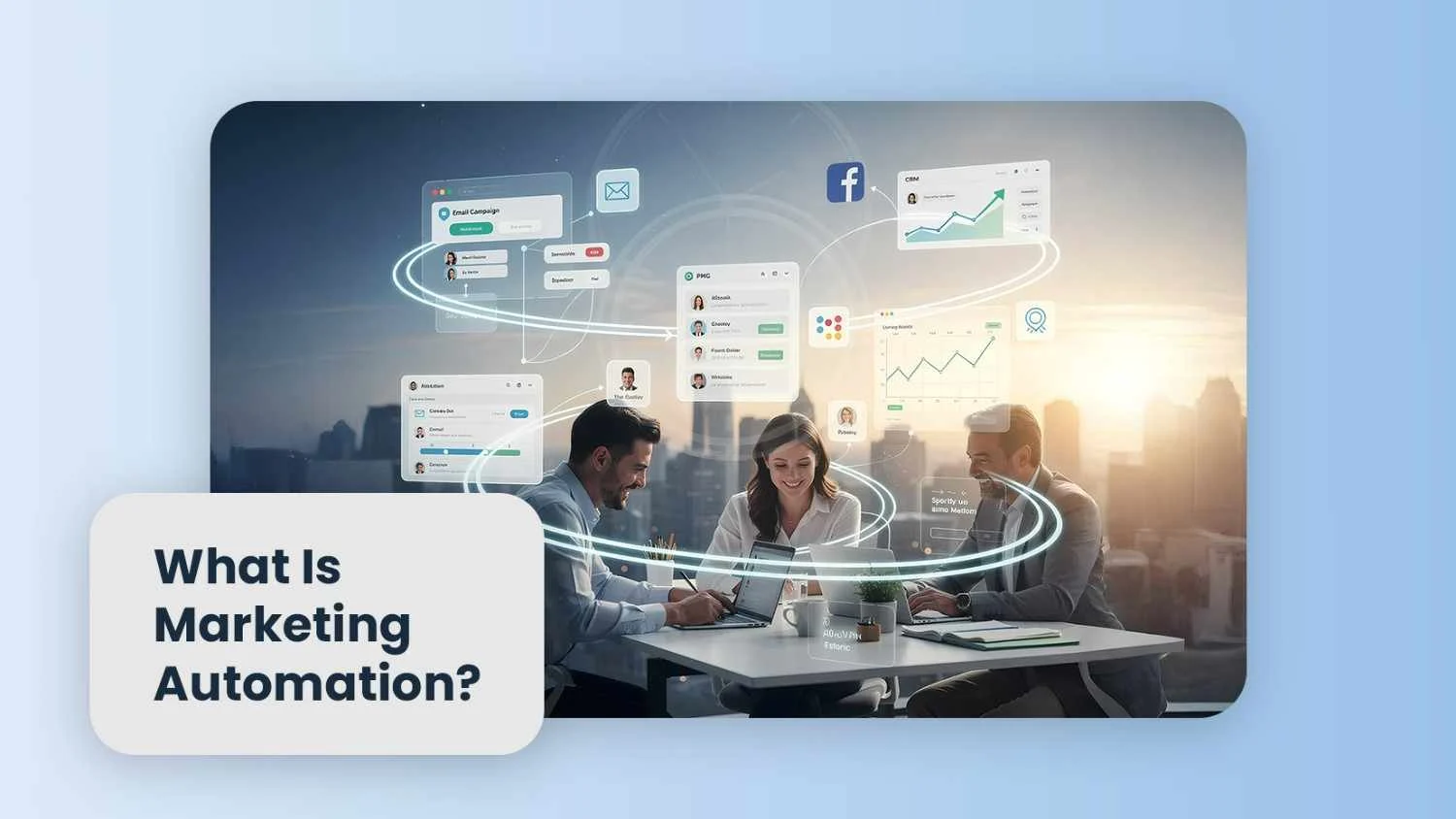
Marketing automation means using software to plan, run, and measure marketing activities without doing everything by hand. For small businesses, it works like an extra team member that never sleeps. You save time, stay organised, and reach more people more smartly.
You’ll see what marketing automation is, why it matters for small businesses, and the key benefits of marketing automation for small businesses that want to grow without burning out their teams or budgets.
Marketing automation is the use of tools and software to automate repetitive marketing tasks. Instead of manually sending every email, posting every social update, or following up with each lead one by one, you set up rules and workflows that do the heavy lifting for you.
At its core, marketing automation does three things:
● Listens to what your audience does
● Responds with the right message
●Tracks how well those messages perform
You build the logic once, the system runs it again and again.
For a deeper breakdown of the concept and how it works across channels, explore this guide on what is marketing automation.
Small businesses usually start with a few simple but powerful automated activities:
● Welcome email sequences. When someone joins your list, they get a series of emails that introduce your brand, share value, and invite them to take the next step.
● Abandoned cart emails. When a shopper adds items to the cart but leaves without buying, they receive helpful reminders and maybe an incentive to come back.
● Lead nurturing campaigns Leads receive a series of relevant emails or messages based on their interests, behaviour, or stage in the buyer journey.
● Social media scheduling Posts are planned and scheduled in advance so your brand stays active even on busy days.
● Customer re-engagement Inactive customers receive messages that remind them of your value and encourage them to return.
● Segmentation and tagging Contacts are grouped based on who they are and what they do. This makes future campaigns more targeted and effective.
In short, marketing automation turns scattered, manual marketing into structured, repeatable systems.
Large companies have big teams and bigger budgets. Small businesses don’t. That gap hurts when you try to keep up with modern customer expectations.
Most small business owners wear many hats. One moment, you handle sales. The next moment you solve customer issues. After that, you look at finances. Marketing often gets squeezed into whatever time is left.
Manual marketing eats that limited time.
● Writing and sending individual follow-up emails
● Remembering to email leads again
● Posting on every social platform every day
● Tracking performance across multiple tools
Marketing automation frees you from many of these tasks. You set up smart workflows once, then spend your time on strategy and creativity instead of admin and repetition.
Customers expect:
● Fast responses
● Personalised experiences
● Consistent communication
● Relevant messages across email, social, and maybe even SMS
Trying to deliver that manually becomes almost impossible as your audience grows.
With marketing automation, even a small team can:
● Respond to key actions instantly
● Send tailored content based on behaviour
● Keep communication going without spamming
This is where the real benefits of marketing automation for small businesses start to shine. You look bigger and more organised than your headcount suggests.
The most obvious benefit hits your calendar first.
Marketing automation saves hours every week by taking over repetitive tasks. You no longer:
● Copy and paste similar emails to every new lead
● Manually send follow-ups at specific times
● Try to remember who to contact next
Instead, you design workflows that look something like this:
Simple automation flow: New lead → Welcome email → Wait 2 days → Send helpful resource → Wait 3 days → Invite to demo or offer
You build this once. Every new lead automatically follows this journey. That means your marketing happens even when you’re in meetings, on sales calls, or off for the weekend.
Efficiency improves because:
● Nothing falls through the cracks
● Every lead gets a consistent experience
● Your team focuses on high-value tasks like content, offers, and strategy
Time saved becomes time you can reinvest in product improvement, customer experience, or expanding your offers.
Leads come from many places:
● Website forms
● Social media
● Ads
● Events
● Referrals
Without a system, you end up with patchy lists in spreadsheets or email inboxes. Some leads get attention. Many go cold.
Marketing automation centralises and organises your leads so you can manage them properly.
You connect your forms, landing pages, and other entry points directly to your automation platform. Every new contact:
● Enters the system instantly
● Receives a welcome or confirmation message
● Gets tagged with the right source or interest
No more manual exporting and importing.
Not all leads are equal. Some are ready to buy soon. Others just started researching.
Lead scoring lets you assign points based on actions, such as:
● Opens emails
● Clicks key links
● Visits pricing pages
● Downloads resources
You can then:
● Set alerts for highly engaged leads
● Prioritise follow-up for your sales team
● Trigger special campaigns for hot prospects
Follow-up is where many small businesses lose sales. People show interest but never hear from you again or receive only one message.
Automated follow-ups solve this. You design nurturing sequences that:
● Educate leads about your solution
● Address typical objections
● Share case studies or testimonials
● Guide them gradually toward a decision
The outcome is clearer pipelines and smoother journeys from interest to purchase.
Customers respond better when your messages feel timely and relevant. Marketing automation helps you deliver both.
Instead of blasting the same email to everyone, you can send messages based on:
● What they signed up for
● Pages they visited
● Products they viewed
● Past purchases
For example:
● A lead downloads a guide about SEO. They receive follow-up content mainly about SEO, not paid ads.
● A customer buys a starter product. They receive tips and cross-sell suggestions related to that product.
You can use simple personalisation tokens like names, but the real power comes from delivering the right content themes.
Automation triggers emails and messages at the best time, such as:
● Right after sign-up
● Soon after a download
● When engagement drops
● Around renewal dates
Instead of guessing or sending messages when you remember, the system reacts instantly to behaviours. Customers feel understood, not chased.
This deeper engagement builds trust and makes your brand more memorable.
More leads are great. More conversions are better.
One of the major benefits of marketing automation for small businesses lies in turning better timing and relevance into more sales.
Here’s how automation supports higher conversion rates:
● Nurtured leads feel more confident. After consuming helpful content and seeing proof of your value, they feel ready to buy.
● You reach people at decision moments. Abandoned cart emails reach buyers who already showed strong intent. Reminder campaigns hit right before renewals or key events.
● You test and optimise. Many tools allow A/B testing for subject lines, CTAs, and content. You keep improving over time.
Example mini-funnel:
1. Lead downloads a checklist
2. They receive three educational emails
3. Email four shares of a case study
4. Email five offers a free consultation or discount
Each step removes friction. Many small businesses see meaningful lifts in conversion rates just by adding these structured sequences.
Marketing automation sounds advanced, yet it often costs less than hiring extra staff or agencies for manual work.
You reduce costs because:
● One tool handles several tasks
● You send fewer but more targeted messages
● You waste less budget on uninterested leads
Better targeting means you get more value from:
● Ad spend
● Content production
● Sales efforts
You can also focus on the segments most likely to buy instead of treating all contacts the same. That improves ROI and keeps your marketing spend under control.
For many small businesses, the monthly cost of a marketing automation platform pays for itself with just a few extra conversions.
Consistency builds trust.
If your tone, design, and messaging vary wildly from one touchpoint to another, customers feel confused. Marketing automation helps you standardise your communication.
You can:
● Use branded email templates
● Create default signatures and layouts
● Set up standard sequences for common situations
For example, every new customer might receive:
1. A welcome email
2. A “getting started” guide
3. A follow-up check-in
4. A review or feedback request
Every person who buys from you has the same positive, consistent experience. That consistency strengthens your brand and encourages repeat business.
Guesswork becomes expensive as you grow.
Marketing automation tools track what happens at each step:
● Open rates
● Click-through rates
● Conversion rates
● Unsubscribes
● Revenue per campaign
Over time, you see clear patterns:
● Which subject lines attract attention
● Which offers convert best
● Which segments generate the most revenue
You no longer rely on intuition alone. You make decisions based on data.
That might mean:
● Doubling down on high-performing campaigns
● Fixing weak links in your funnels
● Adjusting your content topics
This is one of the most underrated benefits of marketing automation for small businesses. Data helps you grow in a controlled, intentional way rather than by trial and error.
You do not need every tool on the market. You just need the right mix for your goals and budget.
Most small businesses start with three categories.
These platforms help you:
● Build and segment email lists
● Design and send campaigns
● Automate sequences and workflows
● Track performance
Email remains one of the highest ROI channels for small businesses. Automating it multiplies that impact.
A Customer Relationship Management (CRM) system keeps all your customer and lead data in one place. Many CRMs now include built-in automation features.
With a CRM, you can:
● Track interactions and history
● Manage pipelines
● See where each lead stands
● Trigger automations from sales activity
When you combine CRM data with marketing automation, you bridge the gap between marketing and sales.
Staying visible on social platforms matters, but posting in real time every day drains energy.
Social automation tools help you:
● Schedule posts in advance
● Plan content calendars
● Monitor engagement
● Repurpose content more easily
You still need genuine interaction and community building. Automation just ensures the basics keep running while you focus on real conversations.
For a structured, service-driven approach to all of this, explore PulsePlay Digital’s marketing automation solutions that help small businesses design and implement the right stack from day one.
Manual marketing relies on human effort for each action. You decide when to send an email, who to follow up with, and which message to send next. That works for a handful of leads but falls apart as volume grows.
Marketing automation brings structure and scalability.
Manual marketing:
● Repeats the same tasks over and over
● Depends heavily on memory and discipline
● Breaks down during busy periods
Marketing automation:
● Runs predefined workflows
● Reduces human error
● Handles hundreds or thousands of contacts with the same effort
You still guide strategy, yet the system handles execution.
As your audience grows, manual processes create:
● Missed opportunities
● Inconsistent follow-up
● Delayed responses
Automation scales with your list size. Whether you have 100 contacts or 10,000, each person follows a logical, consistent path.
Accuracy also improves because:
● Rules stay the same until you update them
● Data flows from one step to another
● Segmentation happens based on actions, not guesswork
You move from reactive marketing to proactive, structured campaigns.
Seeing marketing automation in action makes it easier to spot opportunities in your own business.
A drip campaign is a sequence of emails sent over time to educate, nurture, and convert a lead or customer.
Typical drip campaign examples:
● Onboarding series for new subscribers or customers
● Educational mini-course delivered over a week
● Launch sequence for a new product or service
You decide the timing and content once, then the system sends each email automatically.
E-commerce businesses lose a lot of revenue when people add items to the cart but never finish checkout.
An abandoned cart workflow might:
Even a simple two-step sequence can recover a noticeable percentage of lost sales.
Service-based small businesses often lose leads because no one follows up fast enough.
Automation can:
● Send an instant thank-you or confirmation
● Ask a few qualifying questions
● Offer a call booking link
● Notify your team about high-value leads
Leads feel taken care of, and your team works from a clear list of people who have already engaged with your messages.
Marketing automation offers huge benefits, but it also brings a few challenges, especially early on.
New tools take time to understand. Workflows, tags, triggers, and segments can feel overwhelming at first.
Common early hurdles:
● Choosing the right starting workflows
● Understanding how data flows between tools
● Avoiding over-complicated setups
The key is to start with simple, high-impact automations and grow from there instead of trying to automate everything at once.
The market is full of platforms promising “all-in-one” solutions.
Challenges include:
● Comparing features and pricing
● Avoiding tools that are too complex or too basic
● Making sure tools integrate
Small businesses should focus on tools that:
● Fit current needs
● Offer room to grow
● Provide good support and documentation
Working with specialists can help you avoid costly mistakes in the selection stage.
Automation relies on clean data. If your lists are messy, duplicated, or out of date, your automations will misfire.
Data problems lead to:
● Wrong messages sent to the wrong people
● Poor segmentation
● Weak reporting
Make data hygiene part of your process:
● Clean old lists
● Standardise fields
● Remove duplicates
● Regularly update and maintain your database
When your data stays healthy, your automation performs far better.
You gain the most benefits of marketing automation for small businesses when you use it carefully, not just quickly.
Resist the temptation to automate everything from day one.
Instead:
● Pick one or two key journeys
○ New subscriber welcome series
○ Abandoned cart recovery
○ New lead qualification
● Map the steps on paper or a whiteboard
● Build and test them thoroughly
● Add complexity only when the basics work well
This approach avoids confusion and makes your wins easy to track.
Automation should feel human, not robotic.
Begin with questions like:
● What does a new lead need to know first
● Where do customers usually get stuck
● What fears or objections do they have
Then design sequences that:
● Answer these questions
● Remove friction
● Provide value, not just promotions
When you keep the customer journey at the centre, automation enhances relationships instead of turning people off.
Automation is not “set and forget”.
You should:
● Review key metrics each month
● Pause or adjust under-performing sequences
● Test new subject lines, content, and offers
● Remove unnecessary steps that create friction
Small adjustments over time can create big performance gains.
Marketing automation lets small businesses do more with less. It takes repetitive tasks off your plate, keeps leads and customers engaged, and provides clear data for smarter decisions.
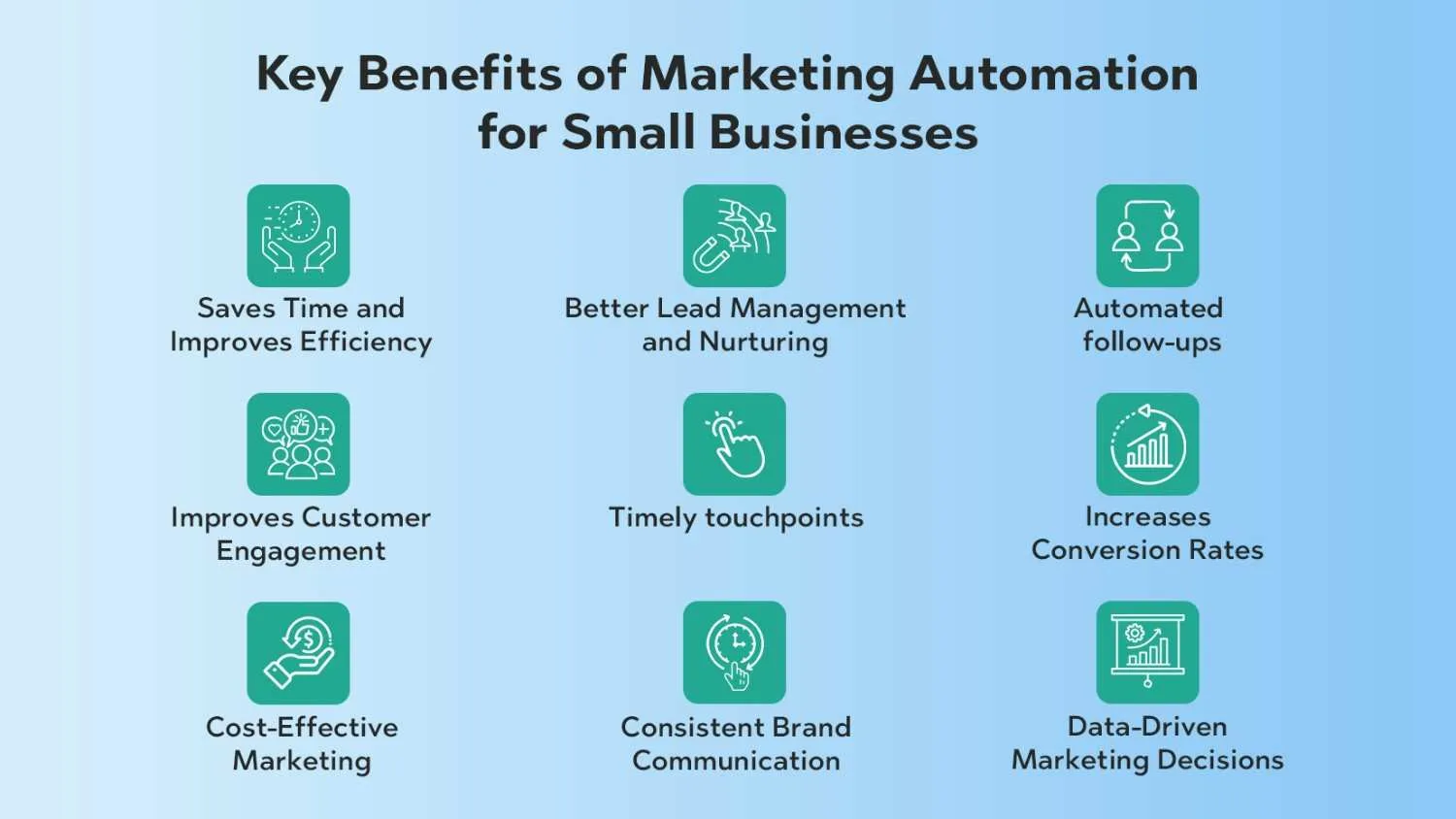
The main benefits of marketing automation for small businesses include:
● Significant time savings
● Better lead management and nurturing
● Higher customer engagement
● Increased conversion rates
● More cost-effective marketing
● Consistent, professional brand communication
● Data-driven strategy
Used well, marketing automation does not replace the human side of your business. It supports it. Your team spends less time on admin and more time on creativity, strategy, and real customer relationships. Over the long term, that combination drives sustainable growth.
Marketing automation helps small businesses:
● Save time by automating repetitive tasks
● Nurture leads with structured follow-ups
● Engage customers with targeted, timely messages
● Increase conversion rates with better journeys
● Improve ROI through smarter targeting and tracking
It turns scattered marketing efforts into a coordinated system that runs consistently in the background.
Yes, marketing automation suits small businesses very well. Many tools are designed specifically for smaller teams and budgets. You don’t need a huge list or complex funnel to benefit. Even simple workflows like welcome emails or basic lead nurturing can make a noticeable difference in results.
Marketing automation increases conversions by:
● Delivering the right message at the right time
● Following up consistently with interested leads
● Providing educational content before asking for a sale
● Recovering abandoned carts or missed opportunities
Leads feel more informed and supported so they feel more comfortable buying from you.
Common tasks you can automate include:
● Welcome and onboarding sequences
●Lead nurturing campaigns
● Abandoned cart reminders
● Re-engagement campaigns
● Birthday or anniversary messages
● Review and feedback requests
● Basic segmentation and tagging
You choose which activities bring the most value and start there.
Marketing automation is usually very cost-effective for small businesses. You invest in one or a few tools but save many hours of manual effort. Better targeting and structured follow-ups also increase revenue from the same audience. Often, a single additional sale each month covers the software cost.
Strictly speaking, no one “needs” them, but they give a real competitive advantage. As soon as your lead and customer base grow beyond what you can manually manage in a spreadsheet, marketing automation tools become almost essential if you want to maintain consistent communication and follow-up.
Marketing automation improves engagement by:
● Sending messages based on behaviour and interests
● Following up quickly when someone takes action
● Delivering a mix of educational, helpful, and promotional content
● Reaching people on the channels they prefer
Customers feel like you understand them rather than treating them as just another email address.
Small businesses commonly use:
● Email marketing platforms with automation features
● CRM systems with integrated workflows
● Social media scheduling and automation tools
The right mix depends on your goals and existing tech stack. Specialist partners like PulsePlay Digital can help you choose and implement a setup tailored to your needs through their marketing automation services.
Marketing automation should not replace every manual activity. It should complement it. Automation handles repetitive tasks and basic communication. Humans still create strategy, content, and high-value interactions such as sales calls or complex support. The best results come from combining both.
A simple starting path:
Starting small and focusing on the key benefits of marketing automation for small businesses ensures you build a system that grows with you rather than overwhelms you.