
Rahul Guleria
SEO Executive
Creative,
Branding
& Growth
in the Global
Digital Ecosystem
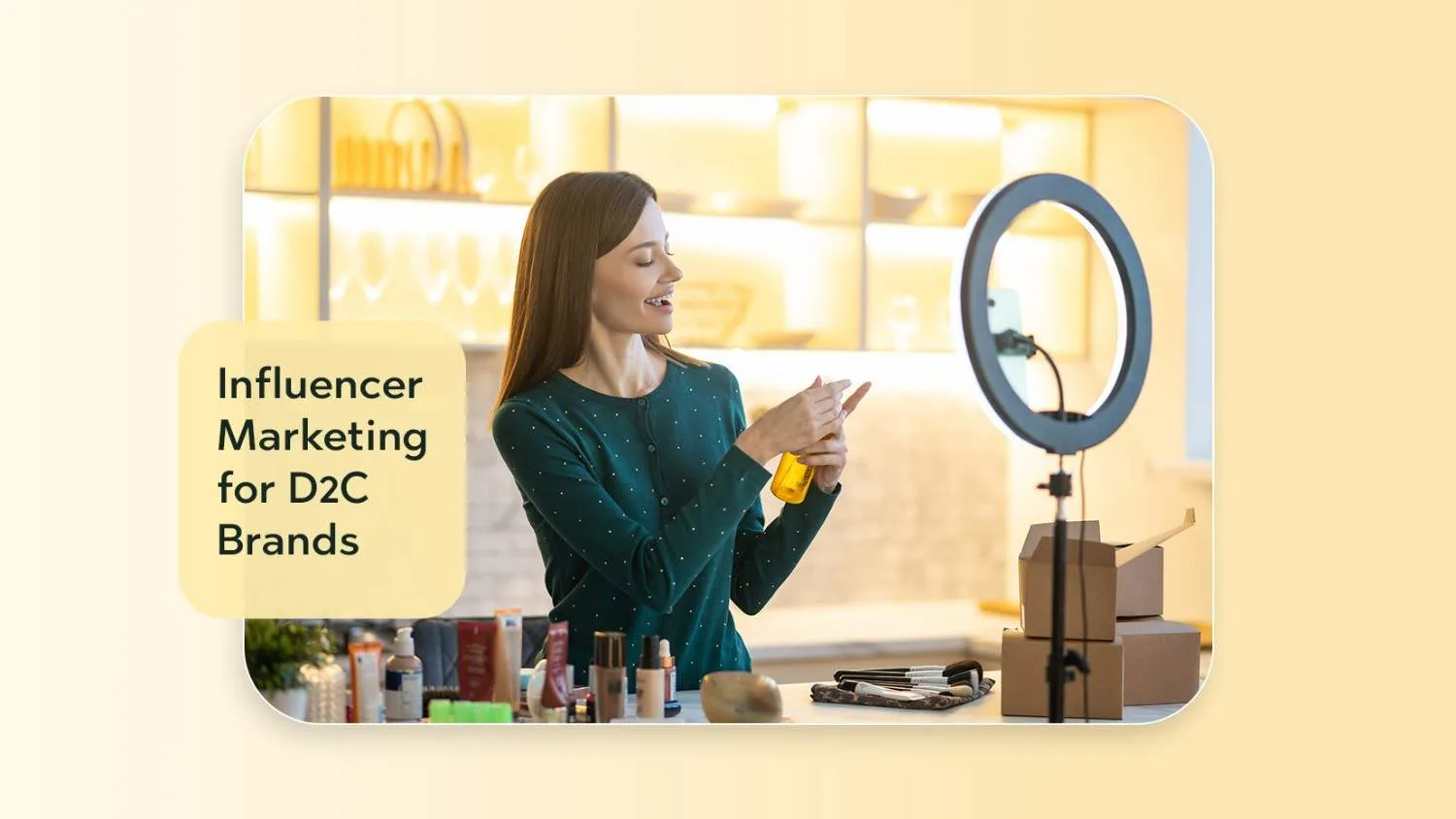
Influencer marketing helps D2C (Direct-to-Consumer) brands build trust, reach target audiences faster, and boost sales through authentic creator partnerships. It bridges the gap between online consumers and brand visibility by tapping into influencers’ credibility, consistency, and social reach. When D2C companies collaborate with creators who already speak to their ideal customers, discovery accelerates, engagement rises, and conversions follow.
Influencer marketing is the practice of partnering with creators—people who’ve built loyal audiences on platforms like Instagram, YouTube, and X—to introduce, demonstrate, and recommend your products. Instead of pushing polished ads, you enable credible voices to tell real stories about how your product fits into daily life.
How does it differ from traditional advertising? Traditional ads interrupt. Influencer content integrates. With TV or display, you rent attention. With influencer collaborations, you earn it. The creator’s style, voice, and relationship with followers carry your message further because it feels like a recommendation, not a broadcast.
For D2C brands, this is gold. You don’t rely on retailers or distributors to deliver brand exposure. You sell straight to the end customer, so every touchpoint matters. Influencer campaigns let you reach those customers directly—no intermediaries and no retail gatekeepers. You can launch fast, test messages quickly, and iterate in real time.
A quick example: In India, brands like Mamaearth and boAt popularized relatable, creator-led storytelling. Mamaearth partners with mom bloggers who share routines, ingredient breakdowns, and baby care tips. boAt works with tech reviewers and lifestyle creators who showcase audio quality, wearability, and real-world usage. That context builds trust and compresses the path from discovery to purchase.
D2C businesses live or die by two things: online visibility and word-of-mouth. You don’t have shelf space in physical stores. You win by being easy to find, easy to love, and easy to share.
Influencers act as brand advocates who build genuine connections at scale. They translate your brand promise into everyday language, show the product in action, and answer questions in comments. Because followers already trust them, recommendations feel natural—not forced.
Here’s the ripple effect across your funnel:
Below is a quick list you can scan and apply. Use it as your cheat sheet when building your D2C marketing strategy.
Audiences trust humans more than logos. When a creator they admire endorses your product—ideally after testing it—your brand inherits that trust. This shortens the “convince me” phase and speeds up purchase decisions.
Creators expand your reach on Instagram Reels, YouTube Shorts, long-form videos, and Stories. Even a handful of well-matched micro-influencers can introduce your brand to tens of thousands of qualified viewers within days.
Affiliate links, unique coupon codes, and trackable storefronts turn attention into measurable revenue. Clear calls-to-action like “Use code BOAT10” simplify the jump from content to cart.
Creators produce snackable, relatable content that shows your product in its natural habitat. You can repurpose that user-generated content (UGC) across your website, email, product pages, and paid ads—often at a fraction of studio-production cost.
Want ultra-specific reach? Pet owners in Bengaluru, plant-based athletes, curly-hair enthusiasts, first-time moms—there’s a creator community for everything. Influencers help you reach those pockets with precision.
Brand mentions, backlinks from creator blogs or YouTube descriptions, and amplified social signals support your organic visibility. When people search for “[your brand] review,” they find authentic content, not just your product page.
Creators host the conversation. They answer questions, run Q&As, and share user stories. Over time, that builds a shared identity around your brand—exactly what you want for loyalty and LTV.
Choosing the right tier matters. A balanced portfolio gives you both depth and breadth.
These examples reveal a pattern: pair product truth with creator storytelling, then remove friction at checkout.
You don’t need a giant budget to start. You need a crisp plan and the discipline to iterate.
Pick one primary KPI per campaign:
Write your goal as a sentence: “This 6-week campaign will drive 1,000 new customers at a CPA under ₹500.”
Evaluate creators on:
Shortlist 20–30 creators across nano, micro, and macro tiers. Think portfolio, not a single Hail Mary.
Let creators create. Provide a clear brief yet avoid scripting their voice. Align on:
Match content to platform behavior:
Set up UTM parameters for every creator, campaign, and placement. Use unique codes per influencer. Pipe data into your analytics platform so you can see the full user journey from content to checkout.
One-off posts work. Ambassadorships work better. Renew creators who deliver on both brand fit and performance. Offer tiered incentives: flat fee + affiliate + milestone bonuses.
Pro tip: pair influencer marketing with social media marketing to scale what works. When an organic creator post hits, amplify it with paid, retarget engaged viewers, and test additional hooks.
If you’re just getting started with the basics of social, this primer helps: What is social media marketing?
Track what matters. Keep vanity metrics in perspective and double-down on the numbers that show movement toward revenue or retention.
Core KPIs
Metric | What It Tells You | How to Improve Fast |
|---|---|---|
Engagement Rate (%) | Relevance of message and creative | Sharper hook, stronger first 2 seconds, clearer framing |
CTR (%) | Strength of CTA and offer | Add urgency, clearer benefit, better link placement |
Conversion Rate (%) | Landing page and product-market fit | Social proof, better PDP images, simplified checkout |
CPA (₹/$) | Efficiency of spend per customer | Negotiate rates, shift budget to top performer |
AOV (₹/$) | Basket size and upsell success | Bundles, tiered pricing, free shipping thresholds |
Brand Mentions / Share of Voice | Organic buzz and community momentum | Encourage UGC, run challenges, spotlight customer stories |
Use cohort views. Compare creators apples-to-apples by looking at results over a fixed window—say, 30 days post-publication—to remove the bias of different posting times or seasonal spikes
Every channel has potholes. Here’s how to steer around them.
Tomorrow’s playbook will feel more like product and performance marketing than “PR with creators.” Watch these trends:
Week 1 – Foundation
Week 2 – Sourcing & Outreach
Week 3 – Creative & Logistics
Week 4 – Go Live & Optimize
Campaign Goal: Drive 500 new purchases at CPA ≤ ₹600 within 4 weeks.
Key Messages (choose 2–3):
Deliverables:
Must-Haves:
Don’ts:
Tracking:
Think of creators as upstream creative engines. Their best-performing hooks often beat agency-produced ads in CPM and CTR. Here’s how to integrate:
Want to build the ecosystem end-to-end? Our social media marketing service plugs your influencer wins into paid, organic, and retention so your brand grows in sync. If you need the basics first, start here: What is social media marketing?
Play it straight. Authenticity isn’t just ethical; it’s effective.
1. Topline: Spend, revenue, CPA, AOV, ROAS 2. Creator League Table: By conversions, CTR, engagement rate 3. Creative Insights: Hooks, angles, formats that beat benchmarks 4. Action Plan: Rebook top 20%, pause bottom 20%, test 3 new hooks 5. Next Steps: Amplify three winners; produce two UGC variants for PDP
Keep it on one page. Decisions love clarity.
Influencer marketing for D2C brands isn’t a side quest. It’s a core growth lever. You build credibility faster, reach the right audiences efficiently, and turn content into commerce with clean tracking. The benefits of influencer marketing extend beyond the initial post—into SEO, paid media, product pages, and brand community. Get your mix of nano, micro, and macro creators right. Write tight briefs. Track ruthlessly. And reward the partnerships that move the needle.
Influencer marketing is one of the most effective growth strategies for D2C brands. It drives awareness, engagement, and conversions while building lasting customer relationships through authenticity and trust. The brands that win treat creators like partners, not placements. They respect the audience, measure what matters, and scale what works.
Start building your D2C brand presence with influencer collaborations that inspire, connect, and convert.
Want a hand designing a performance-first influencer plan and integrating it with your paid and organic channels? Let’s craft your next growth chapter—together.
It’s the practice of partnering with creators who speak to your ideal customers to showcase, review, and recommend your products. Since D2C brands sell directly to consumers, influencer marketing becomes a fast lane for awareness, trust, and sales without relying on retailers.
You need visibility and word-of-mouth to scale. Influencers provide both. Their audiences value their opinions, which shortens the path from “never heard of it” to “adding to cart.”
You gain credible storytelling, targeted reach, conversion-friendly content, and reusable assets. Plus, creators often surface new use cases and customer language you can roll into product pages and ads.
Micro influencers (10K–100K followers) usually offer the best blend of authenticity, engagement, and cost. That said, a healthy mix across nano, micro, and a few macro partners gives you both performance and scale.
Creators drive qualified traffic via swipe-ups, link-in-bio, shop tags, and affiliate codes. Conversion improves when content shows the product in context, answers objections, and pairs with a compelling offer.
Use UTM links, unique discount codes, and last-click vs. view-through attribution to see which creators and formats produce revenue. Track CTR, conversion rate, CPA, and AOV for a full picture.
Fake followers, brand misalignment, tricky attribution, and creative control. You can solve these with audits, tight briefs, smart tracking, and trust in the creator’s process.
Yes—especially with nano and micro creators. Product seeding, affiliate-led deals, and usage rights for top posts let you stretch budgets while learning fast.
Start with your buyer persona, hashtags your customers follow, and creators your existing customers already watch. Evaluate fit, engagement, and content quality before you reach out.
More micro creators, more UGC on product pages, AI-assisted creator discovery, live shopping integrations, and performance-based contracts that reward revenue—not just reach.